
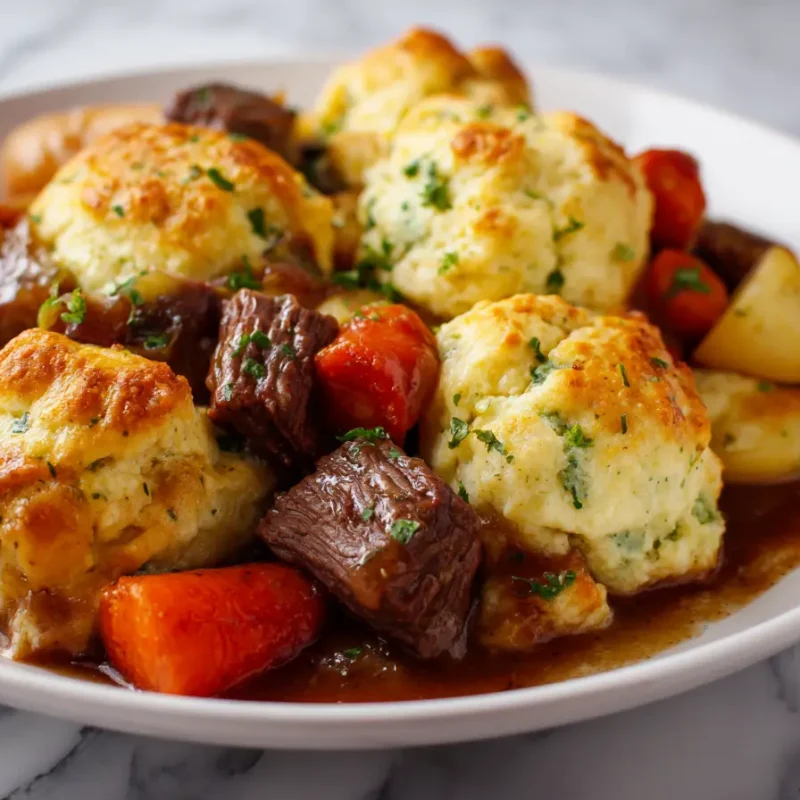
Beef stew with cheddar herb dumplings is the ultimate comfort meal, tender beef, hearty veggies, and fluffy cheesy dumplings for chilly nights.
Cozy Beef Stew with Cheddar Herb Dumplings (A Tavern-Style Favorite at Home)
When the wind is doing that annoying thing where it sneaks under your coat and makes you regret leaving the house at all, this beef stew with cheddar herb dumplings is exactly what I want waiting on the stove. It’s the kind of one pot that makes the whole apartment smell like you did something impressive, even if you started after work and helped with homework in between.
It also has that tavern meals feeling, the kind where you slide into a booth, warm your hands on the bowl, and suddenly life feels manageable again. Except you’re home, in leggings, and nobody is judging the pile of backpacks by the door.
Steam on the windows, a gentle simmer in the pot, and dumplings puffing up like little clouds.
In my kitchen, this is one of those cold weather supper ideas that gets everyone drifting in without me calling them twice. The moment the lid comes off and those cheesy herb dumplings are domed and steamy, my kids magically remember where the kitchen is. It’s cozy, hearty, and exactly what I file under comfy dinner recipes.
Why You’ll Love This One-Pot Stew + Fluffy Cheddar Herb Dumplings
When I think of good comfort meals, I’m looking for simple ingredients, big payoff, and a dinner that doesn’t require a sink full of pans. This one checks every box, and then the cheddar dumplings show up and make it feel extra special.
- It’s a true one pot beef stew (less cleanup, more relaxing).
- Tender beef + hearty veggies that actually feel like dinner.
- Herb dumplings cook right on top, no baking, no fuss.
- Cheddar dumplings add that cozy, savory “tavern” vibe at home.
- Perfect for hearty winter meals recipes when everyone wants something warm and filling.
- Leftovers are even better (hello, next-day lunch).
Ingredients You’ll Need
This is one of those hearty fall recipes that leans on pantry-friendly staples, plus a few fresh basics. The best part is how everything builds in the same pot, starting with onion and garlic, then thyme, then that rich, savory broth that makes the whole place smell like a cozy little restaurant.
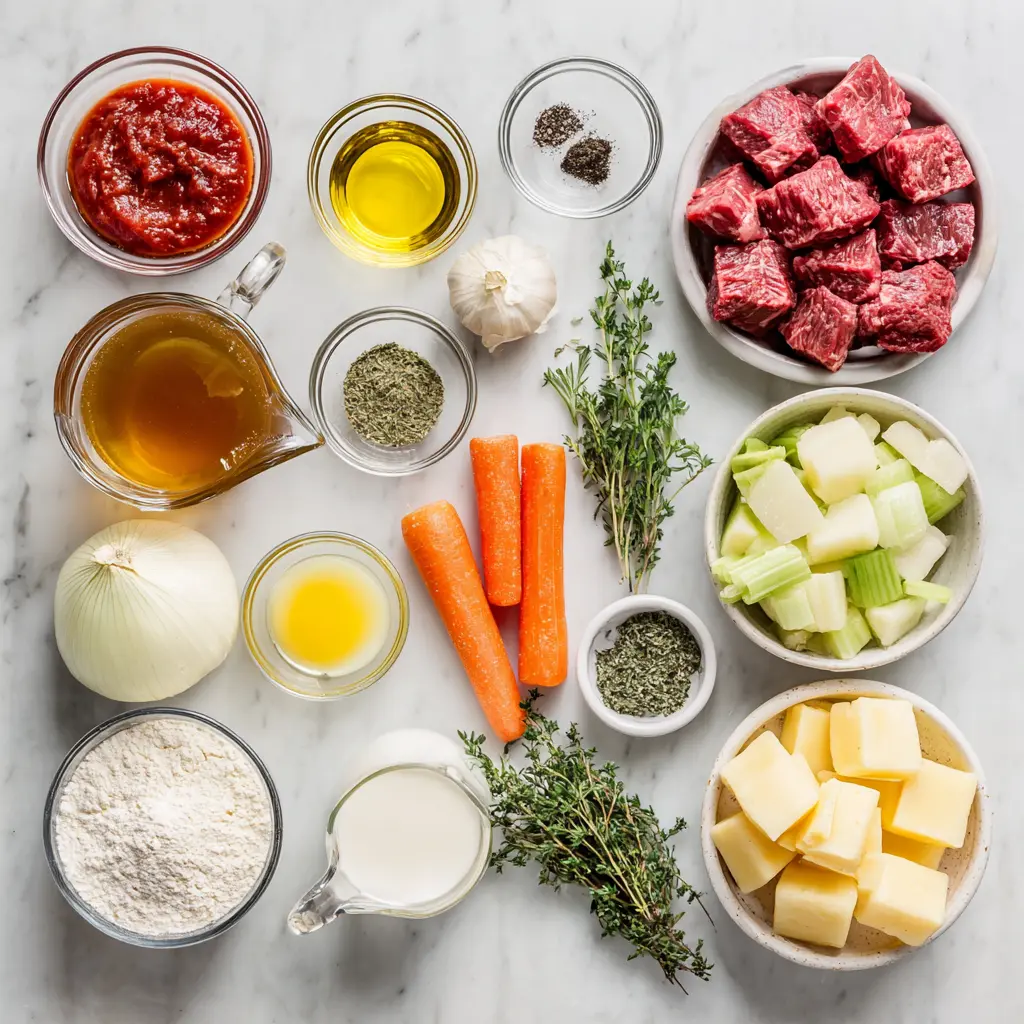
For the stew
- 2 lb beef chuck, cut into 1 1/2-inch cubes
- Salt and freshly ground black pepper, to taste
- 3 tbsp vegetable oil or olive oil, divided
- 1 large onion, chopped
- 3 cloves garlic, minced
- 4 cups beef broth
- 3 large carrots, peeled and cut into chunks
- 2 large potatoes, peeled and cut into chunks
- 2 stalks celery, chopped
- 2 tbsp tomato paste
- 2 tsp Worcestershire sauce
- 1 tsp dried thyme (or 2 tsp fresh thyme leaves)
- 1 bay leaf
- 2 tbsp all-purpose flour (optional, for thickening)
- Fresh parsley, finely chopped (for garnish)
For the cheddar herb dumplings
- 1 3/4 cups all-purpose flour
- 1 tbsp baking powder
- 1/2 tsp salt
- 1 tsp dried herbs such as parsley, thyme, or chives (or finely chopped fresh herbs)
- 1 cup sharp cheddar cheese, grated
- 3/4 cup whole milk or buttermilk
- 3 tbsp unsalted butter, melted
Optional variations (clearly marked)
- Add 1/2 cup peas in the last 5–10 minutes of simmering
- Swap thyme for rosemary, or use a mixed herb blend in the dumplings
- Add 1–2 tsp Dijon mustard to the stew for extra savoriness
Quick callout: Cut veggies evenly for best texture. It’s the simplest way to keep everything tender at the same time, especially on busy nights when you just want dinner to work.
Best Cuts + Simple Prep Notes
Beef chuck is my go-to here because it’s built for slow simmering. It turns buttery and tender, and it gives you that rich stew flavor that feels like it came from a little neighborhood spot.
- Beef: Cut into 1 1/2-inch cubes. Smaller pieces can dry out, bigger pieces take longer to get tender.
- Carrots + potatoes: Aim for 1-inch chunks so they cook on the same clock (this is my unofficial vegetable cut-size guide).
- Onion: A rough chop is fine. It softens and melts into the broth.
- Seasoning: Salt the beef before searing. It’s a small step that makes a big difference.
If you’re cooking for a smaller household and want this to feel like one of those beef dinner recipes for two, you can halve the ingredient amounts and use a smaller pot. The method stays the same, and you still get that cozy payoff.
How to Build Deep Stew Flavor (Without Complicating Dinner)
The secret to building deep stew flavor is not fancy ingredients, it’s the order. First you brown, then you toast the tomato paste, then you deglaze, then you let it slow simmer until the beef relaxes into tenderness. The sound of beef searing is basically the dinner version of “you’re on the right track.”
This is also the step that makes it taste like it’s been cooking all day, even if you started after work.
- Do: Brown the beef in batches. Don’t: Crowd the pot, or the beef will steam instead of sear.
- Do: Let the tomato paste toast for about a minute. Don’t: rush past it, that quick darkening is where the cozy richness comes from.
- Do: Scrape up the browned bits when you add broth (that’s deglazing). Don’t: leave that flavor stuck to the bottom.
- Do: Keep a gentle simmer. Don’t: boil hard, it can make the beef tough.
If you love this style of cozy, slow-simmered flavor, you’d probably also enjoy my French onion beef stew. It’s another one of those “smells like a hug” dinners.
Step-by-Step: Beef Stew with Cheddar Herb Dumplings
- Season and sear the beef. Pat the beef dry, then season with salt and pepper. Heat 2 tbsp oil in a large heavy pot over medium-high heat. Sear the beef in batches until browned on all sides, then transfer to a plate.
Eva Tip: If the pot looks dry, add a small splash of oil between batches. Browning is where the stew gets its “tavern” depth. - Sauté the onion and garlic. Lower heat to medium. Add the remaining 1 tbsp oil if needed. Add onion and cook until softened, about 4–5 minutes. Stir in garlic for 30 seconds, just until fragrant.
Eva Tip: This is the moment my kids start wandering in asking, “What smells good?” - Toast the tomato paste. Add 2 tbsp tomato paste and cook, stirring, about 1 minute until it darkens slightly and smells a little sweeter.
Eva Tip: Just a minute in the pot changes the whole background flavor, warmer, deeper, cozier. - Deglaze and build the broth. Pour in a splash of the beef broth and scrape up the browned bits from the bottom. Then add the rest of the broth, Worcestershire sauce, thyme, and bay leaf. Return the beef (and any juices) to the pot.
- Simmer until the beef starts to turn tender. Bring to a gentle simmer, then reduce heat to low, cover, and simmer about 60 minutes, stirring occasionally.
- Add vegetables. Add carrots, potatoes, and celery. Cover and simmer another 35–45 minutes, or until the beef is tender and the vegetables are cooked through.
Eva Tip: Keep it at a low simmer. This is one pot beef stew, not a rolling boil situation. - (Optional) Add peas. If using peas, stir them in during the last 5–10 minutes of simmering.
- Make the dumpling dough. In a bowl, whisk flour, baking powder, salt, and herbs. Stir in grated cheddar. Add milk (or buttermilk) and melted butter, then stir just until combined.
- Scoop dumplings onto the stew. Keep the stew at a gentle simmer. Drop heaping spoonfuls of dough on top of the stew, spacing them out a bit. You’re basically building little islands that will steam into fluffy herb dumplings.
- Cover and cook. Cover tightly and cook 15–18 minutes, or until dumplings are puffed and set. Try not to lift the lid too often.
Eva Tip: Peek, don’t stir. Once the dumplings go on, everyone suddenly gets hungry, but the lid stays on. - Finish and serve. Remove bay leaf. Taste and adjust salt and pepper. Garnish with chopped parsley and serve hot.
Dumpling Success (Fluffy, Tender, and Cheesy)
I learned the hard way that dumplings are like pancakes, the more you mess with the batter, the less happy you’ll be. These fluffy cheddar herb dumplings should feel pillowy, with little herb flecks and pockets of melty cheese.
- Mix gently: Stir just until you stop seeing dry flour, then put the spoon down.
- Scoop, don’t pack: Use a spoon, not your hands, and don’t compress the dough.
- Keep a gentle simmer: A hard boil can make dumplings dense.
- Lid on = steam power: That trapped steam is what makes them rise tall and tender.
- Don’t lift the lid too often: Every peek lets steam escape and slows the cook.
How to Thicken the Stew (Your Choice of Methods)
In my house, we have two camps. One likes it brothy for dunking dumplings. The other wants it thick enough to cling to a spoon. If your stew needs help, here are a few easy ways to thicken beef stew, with or without flour.
- Method 1: Simmer and reduce (no flour).
Best for: A glossy, natural thickness.
How to: Simmer uncovered for 10–20 minutes, stirring occasionally.
When to add: Near the end, before dumplings (or after, very gently). - Method 2: Mash a few potatoes (no flour).
Best for: A cozy, rustic body.
How to: Smash a few potato chunks against the side of the pot and stir them in.
When to add: Once potatoes are fully tender. - Method 3: Flour slurry (with flour).
Best for: Faster thickening and a spoon-coating stew.
How to: Whisk 2 tbsp flour with a little cool broth until smooth, then stir into the simmering stew and cook a few minutes.
When to add: Before dumplings, so you’re not stirring too much once they’re on top.
Serving Ideas (Sides, Toppings, and a Cozy Bowl Moment)
This is already a full meal, but if you’re aiming for that tavern meals vibe, a few simple sides can make it feel like a full spread. I like to set the table with big bowls, a pepper grinder, and extra parsley, then let everyone build their own cozy bowl.
- Sides with stew: simple green salad, roasted green beans, sautéed spinach, or buttered corn
- Something crunchy: sliced cucumbers, quick-pickled onions, or a crunchy slaw
- For extra comfort: warm dinner rolls or toasted bread for scooping
Garnish bar ideas: chopped parsley, extra cracked black pepper, a pinch of dried thyme, or a little extra grated cheddar.
If you’re collecting hearty winter meals recipes for the season, you might also like my French onion beef casserole. It’s another cozy classic that feels special without being complicated.
Leftovers, Storage, and Make-Ahead Notes (Keeping Dumplings Just Right)
Leftovers are one of my favorite parts of this dinner. The flavors settle in overnight, and the next day the thyme and garlic smell even better when you warm it up. My personal routine is packing a lunch container while I’m cleaning up, because if I wait until morning, someone will “accidentally” eat it.
For the best leftovers strategy, think of the dumplings like little sponges. They’re delicious, but they will soak up broth as they sit. If you can, store dumplings and stew separately. If not, don’t worry, just plan to add a splash of broth when reheating.
Eva’s Note:
- Cool leftovers until just warm before sealing containers.
- Store dumplings separately when possible to keep them fluffier.
- Add a little extra broth when reheating to bring the bowl back to life.
If you’re in a stew mood lately, my Irish stew is another cozy option that’s simple and deeply comforting.
Slow Cooker Option (If You Want Dinner to Cook While Life Happens)
On busy school nights, I love a slow cooker plan because it feels like future-you did you a favor. You can still get that cozy stew payoff, then add the dumplings at the end so they stay tender and fluffy.
- Sear the beef first if you have time (optional, but adds flavor).
- Add beef, broth, onion, garlic, tomato paste, Worcestershire, thyme, bay leaf, and vegetables to the slow cooker.
- Cook until beef and vegetables are tender.
- Keep it hot, then scoop dumplings on top near the end.
- Cover and cook until dumplings are puffed and set.
If you want another slow-cooker-friendly dinner, try my crockpot garlic butter beef bites with potatoes. It’s a lifesaver on those “how is it already 5:30?” days.
Frequently Asked Questions about Beef Stew with Cheddar Herb Dumplings
Q: How do you store beef stew with cheddar herb dumplings?
Answer: Let the stew cool until just warm, then transfer to airtight containers. For best texture, store dumplings and stew separately if you can; if they’re stored together, add a splash of broth when reheating to loosen the consistency. Refrigerate promptly. I love how the dumplings puff back up a little when the steam hits the bowl again.
Q: How long does beef stew with dumplings last in the fridge?
Answer: Kept in a tightly sealed container in the refrigerator, it’s best within 3–4 days. The flavor often deepens by day two, while the dumplings soften slightly as they sit. Honestly, the thyme and garlic smell even better the next day.
Q: Can you freeze beef stew with dumplings (and what’s the best way to do it)?
Answer: Yes. For the best results, freeze the stew base without dumplings in a freezer-safe container (leave a little headspace). Thaw overnight in the fridge, reheat gently, and cook a fresh batch of dumplings right on top. If freezing with dumplings, expect them to be softer after thawing; reheat low and slow and add extra broth as needed. I label mine for “future cozy nights,” because you never know when you’ll need one.
Q: What can I substitute for buttermilk in the cheddar herb dumplings?
Answer: You can use whole milk for a mild, tender dumpling. For a bit more tang, stir a small squeeze of lemon into the milk and let it sit a few minutes before mixing (the dough should look slightly thickened). It’s a tiny kitchen science moment, and it’s kind of fun to watch it change.
Q: Can I use a different cheese instead of sharp cheddar?
Answer: Yes, choose a cheese that melts well and has a bold flavor so it still stands up to the stew. Medium cheddar gives a gentler taste; a sharper, aged cheese gives more punch. Grate it yourself for the fluffiest dumpling texture. In my house, someone always sneaks a pinch of cheese while I’m grating it.
Q: How long would this beef stew take in a slow cooker on LOW vs HIGH?
Answer: On LOW, plan for about 7–8 hours for tender beef; on HIGH, about 4–5 hours. Add the dumplings near the end (once the beef and vegetables are tender) and cook them with the lid on until puffed and set. That moment you lift the lid and see the dumplings domed and steamy is pure comfort.
Q: How do I thicken beef stew if it’s too thin (with or without flour)?
Answer: Without flour: simmer uncovered to reduce until the broth turns glossy and slightly coats a spoon; mashing a few potato chunks can also help. With flour: whisk flour with a little cool broth until smooth, then stir it in and simmer a few minutes to cook out any raw taste. Tomato paste can also deepen body and richness when stirred in early. I love watching it go from “soupy” to “spoon-hugging.”
Q: What’s the best way to reheat beef stew with dumplings without drying them out?
Answer: Reheat gently over low heat with a lid, adding a splash of broth if it’s thickened in the fridge. Stir the stew base carefully and avoid breaking up the dumplings; warming slowly helps them stay tender. The microwave works too, use medium power and short bursts, covered, with a spoonful of broth added first. There’s something so cozy about that low simmer and the first spoonful tasting like it “settled in.”
Q: Why did my dumplings turn dense or gummy, and how do I keep them fluffy?
Answer: Dense dumplings usually come from overmixing the dough, packing the flour when measuring, or cooking at too hard a boil. Mix just until combined, measure flour lightly, and keep the stew at a gentle simmer. Once the dumplings go on, keep the lid on so they steam properly, and resist stirring. I learned to stop stirring the minute they hit the pot.
This beef stew with cheddar herb dumplings is one of those hearty winter meals recipes that makes the whole night feel softer around the edges. If you’re craving a cozy, tavern-style bowl without leaving home, I hope you make this soon and let it simmer while life happens around you.
Thank you for cooking with me, I’m so glad you’re here in my little NYC kitchen.
For more cozy weeknight ideas, come follow me on Pinterest.
Print
Beef Stew with Cheddar Herb Dumplings
- Total Time: 2 hours 20 minutes
- Yield: 6 servings 1x
Description
Beef stew with cheddar herb dumplings is the ultimate comfort meal, tender beef, hearty veggies, and fluffy cheesy dumplings for chilly nights.
Ingredients
2 lb beef chuck, cut into 1 1/2-inch cubes
Salt and freshly ground black pepper, to taste
3 tbsp vegetable oil or olive oil, divided
1 large onion, chopped
3 cloves garlic, minced
4 cups beef broth
3 large carrots, peeled and cut into chunks
2 large potatoes, peeled and cut into chunks
2 stalks celery, chopped
2 tbsp tomato paste
2 tsp Worcestershire sauce
1 tsp dried thyme (or 2 tsp fresh thyme leaves)
1 bay leaf
2 tbsp all-purpose flour (optional, for thickening)
Fresh parsley, finely chopped (for garnish)
1 3/4 cups all-purpose flour
1 tbsp baking powder
1/2 tsp salt
1 tsp dried herbs such as parsley, thyme, or chives (or finely chopped fresh herbs)
1 cup sharp cheddar cheese, grated
3/4 cup whole milk or buttermilk
3 tbsp unsalted butter, melted
Instructions
1. Season and sear the beef. Pat the beef dry, then season with salt and pepper. Heat 2 tbsp oil in a large heavy pot over medium-high heat. Sear the beef in batches until browned on all sides, then transfer to a plate.
2. Sauté the onion and garlic. Lower heat to medium. Add the remaining 1 tbsp oil if needed. Add onion and cook until softened, about 4–5 minutes. Stir in garlic for 30 seconds, just until fragrant.
3. Toast the tomato paste. Add 2 tbsp tomato paste and cook, stirring, about 1 minute until it darkens slightly and smells a little sweeter.
4. Deglaze and build the broth. Pour in a splash of the beef broth and scrape up the browned bits from the bottom. Then add the rest of the broth, Worcestershire sauce, thyme, and bay leaf. Return the beef (and any juices) to the pot.
5. Simmer until the beef starts to turn tender. Bring to a gentle simmer, then reduce heat to low, cover, and simmer about 60 minutes, stirring occasionally.
6. Add vegetables. Add carrots, potatoes, and celery. Cover and simmer another 35–45 minutes, or until the beef is tender and the vegetables are cooked through.
7. (Optional) Add peas. If using peas, stir them in during the last 5–10 minutes of simmering.
8. Make the dumpling dough. In a bowl, whisk flour, baking powder, salt, and herbs. Stir in grated cheddar. Add milk (or buttermilk) and melted butter, then stir just until combined.
9. Scoop dumplings onto the stew. Keep the stew at a gentle simmer. Drop heaping spoonfuls of dough on top of the stew, spacing them out a bit.
10. Cover and cook. Cover tightly and cook 15–18 minutes, or until dumplings are puffed and set. Try not to lift the lid too often.
11. Finish and serve. Remove bay leaf. Taste and adjust salt and pepper. Garnish with chopped parsley and serve hot.
Notes
Leftovers are one of my favorite parts of this dinner. The flavors settle in overnight, and the next day the thyme and garlic smell even better when you warm it up. For the best leftovers strategy, store dumplings and stew separately. If not, plan to add a splash of broth when reheating.
- Prep Time: 20 minutes
- Cook Time: 2 hours
- Category: Dinner
- Method: Stovetop
- Cuisine: American
Nutrition
- Serving Size: 1 bowl
- Calories: 450
- Sugar: 4
- Sodium: 800
- Fat: 25
- Saturated Fat: 10
- Unsaturated Fat: 12
- Trans Fat: 0
- Carbohydrates: 30
- Fiber: 4
- Protein: 30
- Cholesterol: 90