
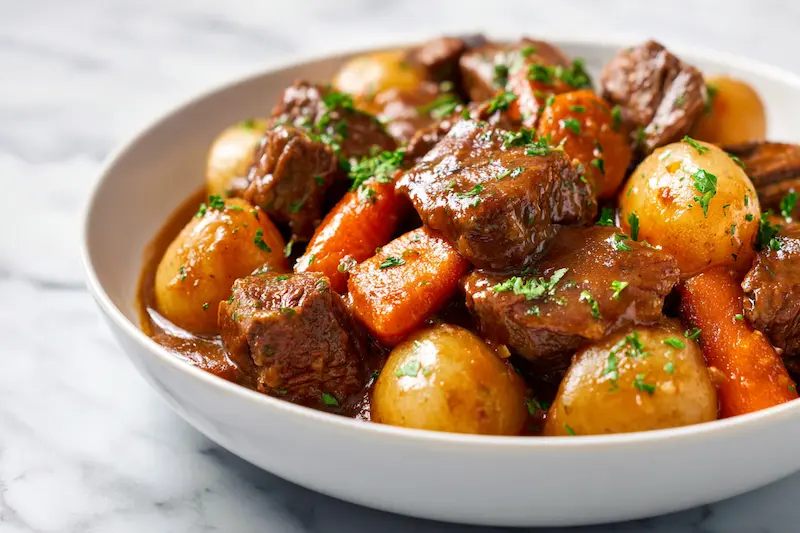
This hearty Irish stew recipe is rich, comforting, and filled with tender beef, potatoes, and carrots simmered low and slow until the whole kitchen smells like home. It is the kind of comfort food dinner that feels steady and familiar, perfect for nights when the wind is loud outside and everyone needs something warm waiting on the table. If you have ever wanted an Irish stew recipe that feels simple, filling, and deeply satisfying, this one belongs in your regular rotation.
A Cozy Irish Stew Recipe for Chilly Evenings
There is something about an Irish stew recipe quietly simmering on the stove that makes a house feel calmer. I have made this hearty beef stew on evenings when homework is spread across the table, backpacks are kicked into corners, and the day still feels heavy on everyone’s shoulders. The pot sits there, doing its slow work, while the smell of beef, potatoes, and broth fills every room.
I grew up believing that a comfort food dinner does not need to be fancy to matter. It just needs time and care. This Irish stew recipe reminds me of cold nights when dinner felt like a reward for getting through the day. The sound of a gentle simmer, the steam on the windows, and that first spoonful that warms you all the way through.
This is a stew that asks you to slow down. A one pot stew that feels grounding, steady, and familiar. When the kids wander into the kitchen asking when it will be ready, I know we are close. That is the magic of a slow simmered stew. It does not rush you. It waits, just like comfort should.
Why This Irish Stew Works Every Time
There are a lot of stew recipes out there, but this Irish stew recipe is one I come back to again and again because it simply works. It does not rely on tricky steps or special tools. It trusts the ingredients and the process, which is exactly what a traditional Irish stew should do.
On busy evenings, a one pot dinner like this feels like a small gift to yourself. Everything cooks together, flavors building slowly instead of all at once. That slow pace matters. It is what turns basic ingredients into a hearty beef stew that tastes like you spent all day on it, even if most of the time it was just quietly simmering while life happened around you.
What makes this stew reliable is its simplicity:
• Simple ingredients that are easy to find and affordable
• Slow cooking that allows the beef to soften and the broth to deepen
• One pot that keeps cleanup manageable on long days
• Balanced flavors that feel comforting, not heavy
This is the kind of comfort food dinner you can trust. No surprises, no stress. Just a warm bowl of stew that shows up for you every single time.
Ingredients You’ll Need
Before you start this Irish stew recipe, it helps to lay everything out on the counter. I always do this while the kitchen is still quiet, usually right after a grocery run. There is something calming about seeing all the pieces ready to come together, especially for a classic beef and potato stew like this.
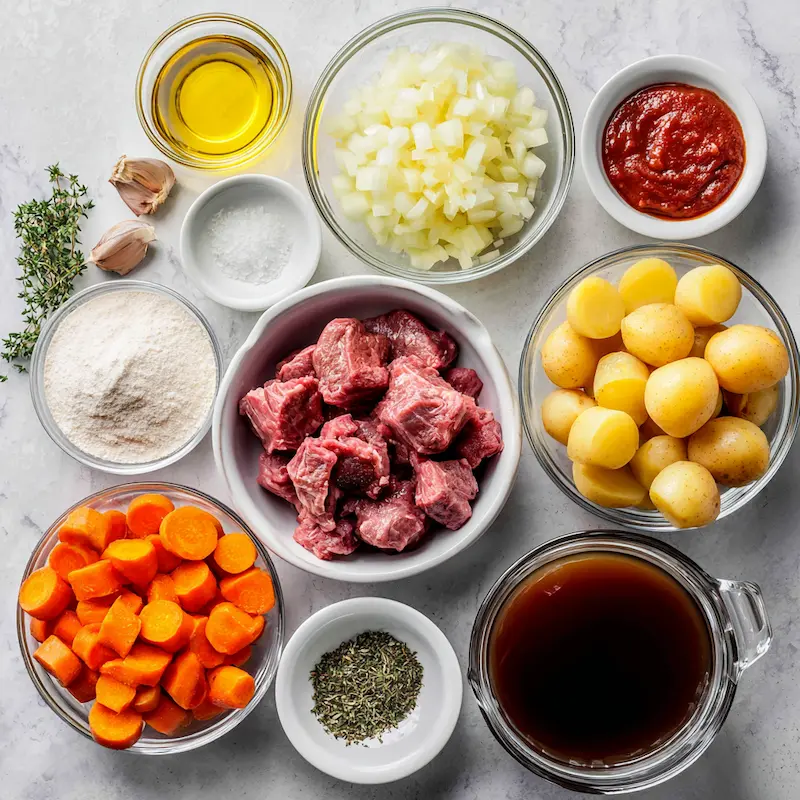
When you shop, look for fresh vegetables and good quality beef. This is not a recipe where ingredients hide behind heavy seasoning. Each one matters, and each one gets its moment during the slow simmer. That is how beef stew ingredients turn into something truly comforting.
• 2 tablespoons olive oil
• 3 pounds beef stew meat
• 1 cup onion, coarsely chopped
• 1 tablespoon minced garlic
• ¼ cup all purpose flour
• 1 cup rich dark malted broth
• 4 cups beef broth
• ¼ cup tomato paste
• 2 pounds small yellow potatoes, halved
• ½ teaspoon dried thyme leaves
• 2 cups carrots, peeled, halved, and cut into 1 inch pieces
• Salt and black pepper, to taste
• 2 tablespoons chopped parsley
Eva’s Note: I always take a minute to cut the vegetables evenly. When the potatoes and carrots are close in size, they cook at the same pace and give you that perfect, consistent tenderness in every spoonful.
How to Make Irish Stew Step by Step
This is where the Irish stew recipe really comes to life. Take your time here. None of these steps are hard, but each one builds flavor. I usually start this in the late afternoon, knowing the slow simmered stew will be ready right when everyone starts drifting into the kitchen asking what smells so good.
Browning the Beef for Deep Flavor
- Heat the olive oil in a large, heavy pot over medium high heat.
- Add the beef stew meat in batches, seasoning lightly with salt and black pepper.
- Brown the beef on all sides, then transfer it to a plate before adding the next batch.
That deep brown color on the beef is where so much flavor starts. If the pot feels crowded, wait. Beef needs space to sear properly.
High Value Tip: Don’t rush the sear. That deep color is where the magic begins.
Building the Stew Base
- Lower the heat to medium and add the chopped onion to the same pot. Stir, scraping up the browned bits from the bottom.
- Add the minced garlic and cook for about 30 seconds, just until fragrant.
- Sprinkle the flour over the onions and garlic, stirring constantly to coat everything evenly.
- Slowly pour in the dark malted broth, stirring to avoid lumps.
- Add the beef broth and tomato paste, mixing until smooth.
This base is what thickens the stew naturally as it cooks. The flour and slow heat work together over time.
Slow Simmer to Tender Perfection
- Return the browned beef and any juices to the pot.
- Add the potatoes, carrots, and dried thyme.
- Bring the stew to a gentle simmer, then reduce the heat to low.
- Cover and cook for about 2 hours, stirring occasionally.
You are looking for fork tender beef and potatoes that hold their shape but feel soft all the way through. This is a true simmered beef stew, not a boil.
High Value Tip: Taste at the end. Salt blooms differently after simmering, so adjust seasoning right before serving.
Eva’s Note: Once the heat is off, I let the stew sit for about 10 minutes. It settles, thickens slightly, and tastes even better.
If you love comforting stews like this one, you might also enjoy another comforting beef stew that is just as cozy and satisfying.
How to Know When Your Stew Is Perfect
One of the questions I hear most about any Irish stew recipe is how to tell when it is truly done. Timing matters, but your senses matter more. A slow simmered stew speaks to you if you know what to look for.
First, check the beef. A fork should slide in easily and pull away without resistance. If it still feels tight, it needs more time. This is how a tender beef stew tells you it is ready. Rushing this step only gives you chewy meat, and nobody wants that after waiting all afternoon.
Next, look at the potatoes. They should be soft but not falling apart, soaking up all that rich broth. When you stir, the stew should feel thicker than soup but not heavy. That gentle thickness comes from patience, not shortcuts.
Finally, trust the smell. When the whole kitchen smells warm and full, when the broth feels rounded and calm instead of sharp, your slow simmered stew is ready.
Quick checklist before serving:
• Beef is fork tender
• Potatoes are soft but intact
• Broth coats the spoon lightly
• Aroma feels rich and comforting
Serving Suggestions for Irish Stew
By the time this Irish stew recipe is ready, the house usually feels quieter. Everyone seems to gather without being called, drawn in by the smell alone. That is when I know it is time to serve. Irish stew is filling all on its own, but a few simple sides turn it into a full, cozy dinner that feels thoughtful without extra work.
I love setting the pot right on the table and letting everyone help themselves. It feels communal, warm, and relaxed, which is exactly how comfort food should be served. The rich broth begs for something to soak it up, and a fresh side keeps the meal balanced.
Here are a few of our favorite ways to serve this stew:
• With a simple green side dish like garlic butter green beans for a fresh contrast
• Alongside crusty homemade bread such as roasted garlic and rosemary sourdough bread to catch every drop
• Finished with a sprinkle of chopped parsley for color and freshness
• Served in wide bowls so the beef and potato stew stays hot longer
This is one of those cozy dinner ideas that does not ask for perfection. Just warm bowls, full plates, and people you care about nearby.
Make Ahead, Storage, and Freezing Tips
One of my favorite things about this Irish stew recipe is how practical it is. On weeks when life feels packed from morning to bedtime, knowing dinner is already handled brings real peace of mind. This is a stew that does not just survive leftovers. It actually gets better.
If you are planning ahead, this make ahead stew is a great choice. The flavors deepen overnight, and the broth thickens just a bit more as it rests. I often make it a day early, then gently reheat it while the kids finish schoolwork or I tidy up the kitchen.
For storing:
• Refrigerator: Let the stew cool completely, then store it in an airtight container for up to 4 days.
• Freezer: This stew freezes beautifully. Cool fully, portion into freezer safe containers, and freeze for up to 3 months.
When freezing beef stew, I always label the container with the date. Future me is always grateful on those busy weeks when cooking feels like too much. Thaw overnight in the fridge, then reheat slowly on the stove until warmed through.
Frequently Asked Questions about Irish Stew
When I share this Irish stew recipe, these are the questions that always come back in emails and comments. I love answering them because they usually come from someone standing at their stove, spoon in hand, wanting reassurance that they are doing it right.
What cut of beef is best for Irish stew?
Beef stew meat or chuck is the best choice for a traditional Irish stew. These cuts have enough connective tissue to soften during a long, slow simmer, which gives you that tender, fall apart texture everyone hopes for. I still picture my grandmother at the butcher counter, asking questions and choosing carefully. She always said the right cut mattered more than anything else in a hearty beef stew.
How do you thicken Irish stew?
This Irish stew recipe thickens naturally. The flour added early helps, but the real work happens during the slow simmer. As the stew cooks, the starch from the potatoes and the gentle reduction of the broth create a rich, spoon coating texture. I love watching the steam rise and seeing the broth change little by little as time passes.
Can Irish stew be made ahead of time?
Yes, and honestly, it should be. Irish stew tastes even better the next day after the flavors have had time to settle and deepen. I have reheated leftovers on quiet evenings when dinner felt effortless, and those bowls were always extra comforting. Just warm it slowly and give it a gentle stir.
Can Irish stew be frozen?
Absolutely. Let the stew cool completely, then freeze it in airtight containers for up to three months. I always label mine with the date because busy weeks sneak up fast. Having a homemade comfort food dinner waiting in the freezer feels like a small kindness you give yourself ahead of time.
A Final Bowl of Comfort Before You Go
Every time I make this Irish stew recipe, I am reminded that good food does not need to be complicated to matter. It just needs care, time, and a little patience. This stew has a way of slowing the evening down, of pulling everyone closer to the table without saying a word. It is steady, familiar, and deeply comforting in the way only a true comfort food dinner can be.
If you are new to making stew, let this be the recipe that builds your confidence. And if you have been cooking for years, I hope this Irish stew recipe feels like coming home to something you already love. From the slow simmer to the last spoonful, it is a reminder that some of the best meals are the ones that quietly take care of us.
Thank you for cooking alongside me today. I hope this stew warms your kitchen, your table, and maybe even a long day.
Print
Hearty Irish Stew Recipe That Warms From the First Spoonful
- Total Time: 2 hours 20 minutes
- Yield: 6 servings 1x
Description
A hearty Irish stew made with tender beef, potatoes, carrots, and a rich broth, slowly simmered until comforting and filling.
Ingredients
2 tablespoons olive oil
3 pounds beef stew meat
1 cup onion, coarsely chopped
1 tablespoon minced garlic
1/4 cup all-purpose flour
1 cup rich dark malted broth
4 cups beef broth
1/4 cup tomato paste
2 pounds small yellow potatoes, halved
1/2 teaspoon dried thyme leaves
2 cups carrots, peeled and cut into 1-inch pieces
Salt and black pepper, to taste
2 tablespoons chopped parsley
Instructions
1. Heat olive oil in a large heavy pot over medium-high heat
2. Brown beef in batches, seasoning lightly with salt and pepper, then remove to a plate
3. Add onions to the pot and cook until softened, scraping up browned bits
4. Stir in garlic and cook briefly until fragrant
5. Sprinkle flour over the onions and stir to coat evenly
6. Slowly pour in malted broth, stirring to prevent lumps
7. Add beef broth and tomato paste, stirring until smooth
8. Return beef and juices to the pot
9. Add potatoes, carrots, and thyme
10. Bring to a gentle simmer, then reduce heat to low
11. Cover and cook for about 2 hours, stirring occasionally
12. Taste and adjust seasoning before serving
Notes
Do not rush browning the beef, as color builds flavor
Cut vegetables evenly for consistent cooking
Let the stew rest for 10 minutes before serving to allow it to thicken
This stew tastes even better the next day and freezes well
- Prep Time: 20 minutes
- Cook Time: 2 hours
- Category: Dinner
- Method: Stovetop
- Cuisine: Irish
Nutrition
- Serving Size: 1 bowl
- Calories: 520
- Sugar: 6g
- Sodium: 780mg
- Fat: 28g
- Saturated Fat: 10g
- Unsaturated Fat: 15g
- Trans Fat: 0g
- Carbohydrates: 34g
- Fiber: 5g
- Protein: 38g
- Cholesterol: 115mg