
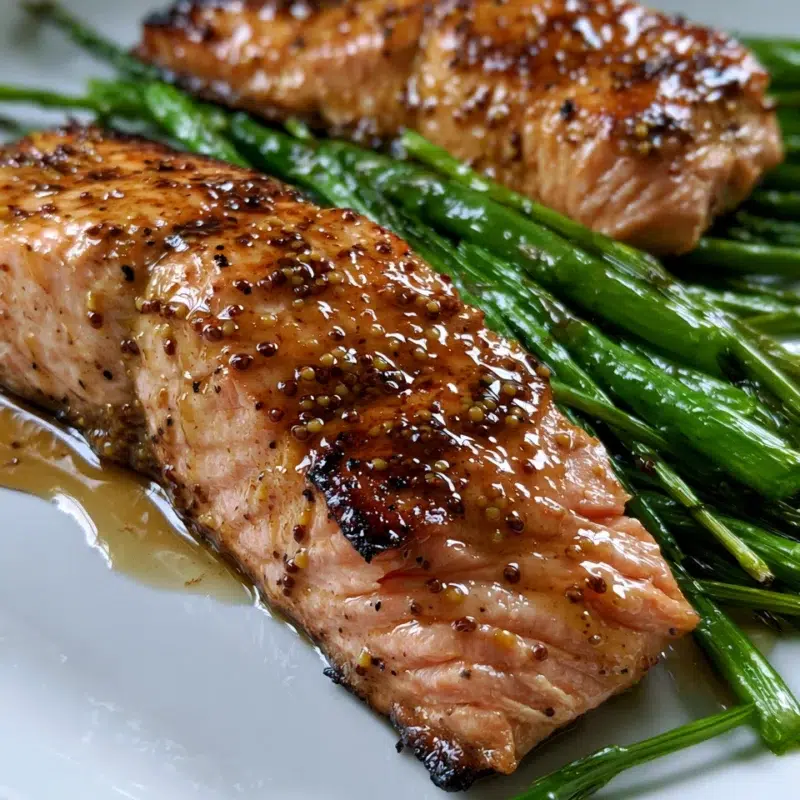
The first time I make this Salmon Asparagus Sheet Pan each spring, it feels like my kitchen finally exhales. The asparagus shows up looking bright and perky, the salmon is rosy and fresh, and suddenly dinner doesn’t feel like a chore. It feels like a small win, the kind you take on a busy weeknight when homework is happening, someone cannot find a shoe, and you still want real food on the table.
When that maple mustard glaze hits the heat, it smells like sweet warmth and tang all at once, like a little caramelization meeting a cozy deli mustard bite. It’s the kind of “everyone wanders into the kitchen” smell, even if they swear they are not hungry.
This is my clean-pan, bright-flavor dinner for spring nights.
If you love spring sheet pan salmon, this one is especially forgiving. You get that glossy, sweet-tangy finish, and you only have one pan to wash. Sheet pan salmon asparagus is my weeknight safety net, and this version feels just a little special without making extra work.
Why Salmon + Asparagus Works So Well in Spring
Salmon with asparagus just makes sense this time of year. It’s fresh, it’s colorful, and it cooks fast, which is basically my whole personality at 5:30 p.m. when the kids are circling the kitchen.
When I’m picking asparagus, I look for thin spears that feel firm (not bendy) with tight tips. If the ends look dried out, I keep walking. Fresh asparagus roasts up crisp-tender, and it plays so nicely with the sweet glaze on the salmon and asparagus pan.
- Flavor: Rich salmon plus sweet-tangy maple mustard is a perfect match.
- Texture: Tender flakes of salmon with snappy roasted asparagus is the contrast you want.
- Convenience: One pan, quick cook, and dinner feels like it has “spring energy.”
Ingredients You’ll Need
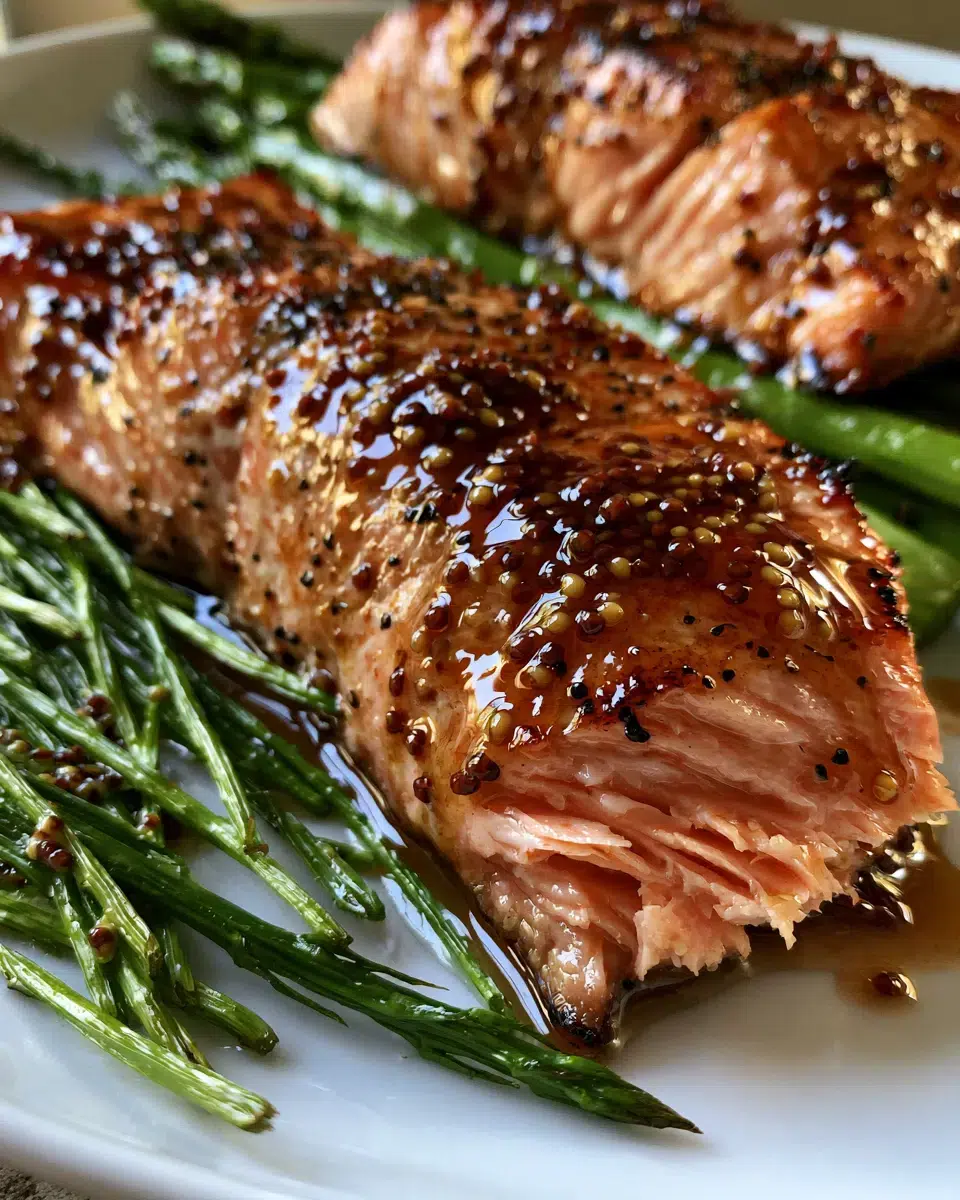
You do not need a long list to make this sheet pan salmon asparagus dinner feel exciting. Most of this is pantry-staple friendly, and the glaze is the little trick that makes it taste like you tried harder than you did. The mustard + maple balance is kid-friendly but not boring, which is a narrow lane in my house.
- 2 lb wild salmon (cut into portions if needed)
- 1 lb thin asparagus spears, trimmed (thin asparagus = faster cook)
- ⅓ cup maple syrup (sweetness and shine)
- ¼ cup whole grain mustard (texture and tang)
- 2 tsp yellow mustard (familiar zip, helps the glaze taste “classic”)
- 1 tbsp olive oil (helps roasting and prevents sticking)
- 2 tsp prepared horseradish (optional) (a little horseradish heat, if you want it)
- 1 pinch salt (simple, but it matters)
- 1 pinch black pepper (for warmth)
Important: Reserve a spoonful of glaze for finishing. That last swipe at the table makes it feel like a “real” dinner, even on a Tuesday.
Maple-Mustard Glaze Flavor Profile (And How to Adjust It)
This maple mustard glaze tastes sweet first, then tangy, then cozy and savory as it bakes onto the salmon. The whole grain mustard gives it little pops of texture, while yellow mustard keeps it familiar and bright. If you add prepared horseradish, it brings a gentle nose-tingle heat that adults tend to love.
In my house, I usually keep it mild because Emma (my 9-year-old) thinks “spicy” means black pepper is showing off. Then I’ll add a tiny extra dab of horseradish to my own piece after it bakes, like a quiet little treat.
Make it yours:
- Add more whole grain mustard for extra tang and texture.
- Use more yellow mustard if your family likes that classic mustardy bite.
- Add horseradish heat a little at a time, it builds quickly.
How to Make Salmon Asparagus Sheet Pan (Step-by-Step)
This is one of those dinners where the order matters just enough to keep things stress-free. When everyone is hungry, I prep the asparagus first, then the salmon, then whisk the glaze while the oven heats. It keeps me moving, and it keeps the kitchen calm, or at least calmer than it would be otherwise.
Eva’s Note: I line the pan every single time. I have learned this the hard way. The glaze is worth it, but it gets sticky, and I am not trying to scrub a sheet pan at 7 p.m.
- Preheat and prep the pan. Heat your oven to 425°F. Line a large sheet pan with parchment paper for easy cleanup. If you do not have parchment, you can lightly oil the pan, but parchment makes life easier.
- Trim the asparagus and prep the salmon. Snap or cut off the woody ends of the asparagus, then spread the spears on a clean towel. Pat the salmon dry with paper towels and portion it if needed.
- Whisk the glaze. In a small bowl, whisk together ⅓ cup maple syrup, ¼ cup whole grain mustard, 2 tsp yellow mustard, 1 tbsp olive oil, optional 2 tsp prepared horseradish, plus a pinch of salt and black pepper. Spoon out and reserve a little glaze for finishing at the table. Tip: Reserve a spoonful of glaze now, so you do not forget later when dinner brain kicks in.
- Arrange everything on the sheet pan. Place the salmon pieces skin-side down if they have skin. Add asparagus alongside, giving everything a little breathing room so it roasts instead of steams. Tip: Don’t crowd the pan. Crisp edges happen when hot air can circulate.
- Brush on the glaze. Brush the glaze over the salmon first, then lightly over the asparagus. Tip: Dry the salmon well for better glaze cling. It’s a tiny step, but it’s the difference between a glossy coat and a sauce that slides right off.
- Bake, then finish. Bake for about 10 to 14 minutes, depending on thickness, until the salmon is opaque at the edges and flakes easily. If you want a slightly more caramelized top, broil for 1 to 2 minutes at the end, watching closely so the glaze does not burn.
Let the salmon rest for a minute or two, then brush or spoon on that reserved glaze right before serving. This Salmon Asparagus Sheet Pan is simple, but that last glossy finish makes it feel like you planned it.
Timing & Doneness Guide (So Nothing Overcooks)
How long do you bake salmon and asparagus on a sheet pan? The honest answer is that your salmon thickness decides dinner, not the clock. I always check the thickest piece first, because that’s the one that decides dinner.
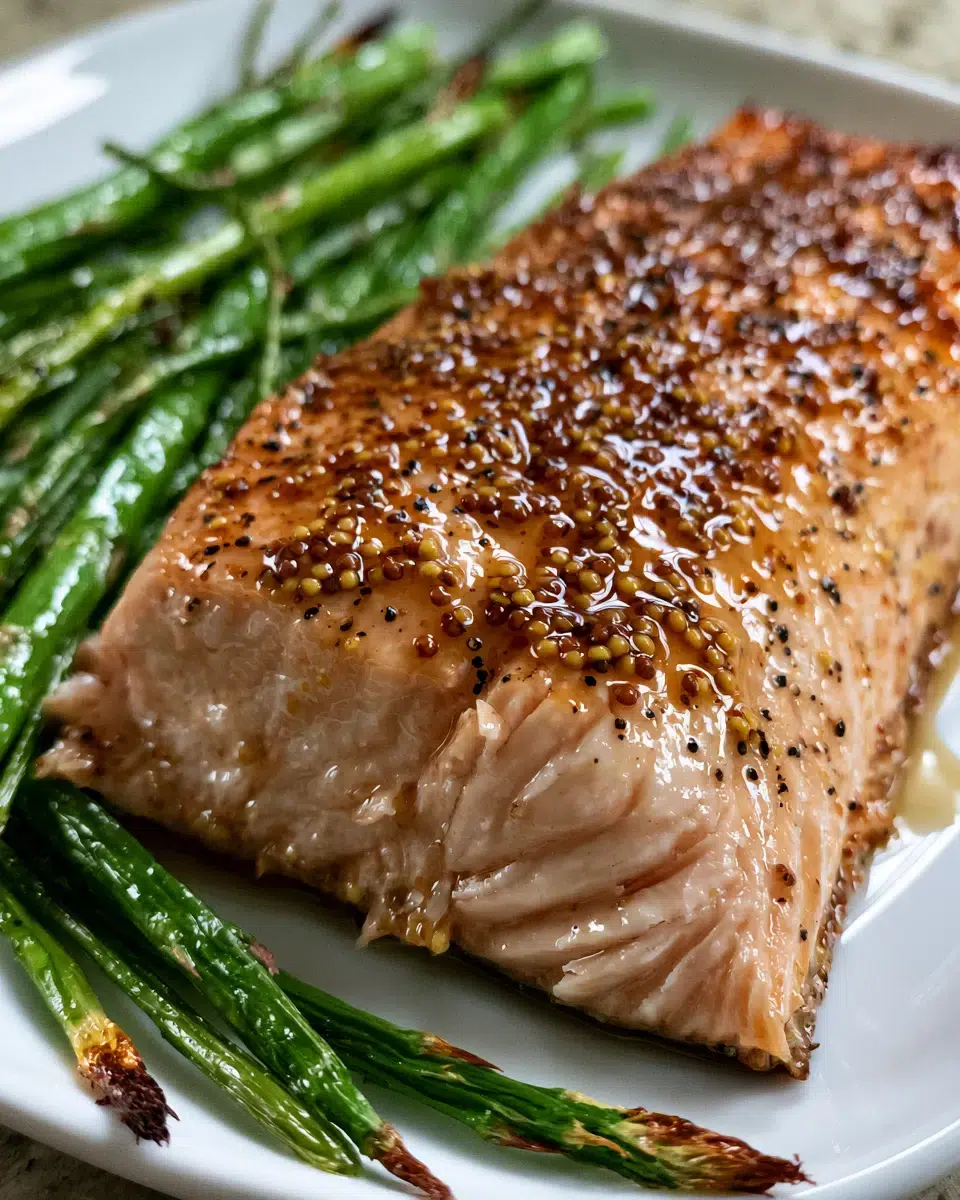
Perfect salmon in my kitchen looks opaque around the edges, still juicy in the center, and it flakes when you press gently with a fork. Asparagus should turn a deeper green and feel tender with a little snap, not limp.
- Salmon about 1 inch thick: 10 to 12 minutes at 425°F
- Salmon 1¼ inches thick: 12 to 14 minutes at 425°F
- Salmon 1½ inches thick: 14 to 16 minutes at 425°F (check early and often)
- Thin asparagus: usually done in the same time as average salmon
- Very thin, pencil-thin asparagus: consider adding it halfway through so it stays crisp-tender
- Thicker asparagus: it can go on from the start, just make sure it has space to roast
Those pencil-thin spears are spring perfection, but they don’t need the same oven time as thicker ones. If your bunch is extra thin, stagger the asparagus so it does not get mushy.
Optional Add-On: Roast Potatoes on the Same Pan
This is the version I make when I want the meal to feel extra filling, like the kind of dinner that carries everyone through soccer practice and late homework without anyone asking for snacks 20 minutes later. Salmon and potatoes on baking sheet dinners are cozy in the best way, and the potato edges get golden while the salmon stays tender.
If you want a true salmon asparagus potato recipe, here’s the timing trick: the potatoes need a head start. Once you get the rhythm, sheet pan salmon asparagus potatoes feels like the smartest dinner hack in your back pocket.
- Toss 1½–2 lb small potatoes (halved or chopped) with 1–2 tbsp olive oil and ½ tsp salt.
- Roast potatoes at 425°F for 15 to 20 minutes, until they are starting to soften and brown at the edges.
- Push potatoes to one side, then add salmon to the pan.
- Add asparagus too, unless it is very thin. If it is pencil-thin, add it halfway through the salmon bake.
- Brush glaze on salmon (and lightly on asparagus), then bake another 10 to 14 minutes until salmon is done and potatoes are crisp.
If you want extra potato confidence, this is my go-to method for golden roasted potatoes, and it pairs beautifully with salmon with potatoes and asparagus.
Pan Prep & Quick Cleanup Tips
I love a sheet pan dinner because dinner and cleanup happen at the same time, at least that’s what I tell myself while I’m wiping counters. The glaze is the only “messy” part here, and a few small habits keep it from turning into a sticky situation.
I will confess, the first time I made a maple-based glaze like this, I brushed it on too thick and walked away. It caramelized fast, then it flirted with burning. Now I keep the layer thin and save a little for the end, and it behaves so much better.
- Parchment paper: best for quick cleanup and easy release.
- Give everything space: prevent sticking and help the sheet pan roast, not steam.
- Pat salmon dry: helps the glaze cling and prevents watery pooling.
- Brush a thin coat first: thick layers can darken too quickly.
- Watch the broil: if you broil, do not take your eyes off it.
Serving Ideas (Make It a Full Spring Dinner)
This salmon and asparagus pan is already a full meal, but I love adding one simple side to make it feel like a real spring dinner. When it’s just the five of us, I keep it casual and set everything out family-style. When friends drop by, I add one extra bowl on the table and suddenly it looks like I had a plan.
- Warm rice or quinoa to catch extra glaze
- A simple green salad with lemony dressing
- Crusty bread for swiping the pan juices (highly recommended)
- Fresh fruit on the side, especially berries in spring
- a crisp cucumber salad on the side for something cool and crunchy
If you are serving spring sheet pan salmon for company, add a platter, sprinkle a little extra black pepper, and let the colors do the work. Salmon and asparagus just looks happy on a table.
Storage & Reheating Notes (So the Salmon Stays Tender)
Leftovers of sheet pan salmon asparagus make such a good next-day lunch. The glaze mellows a little overnight, and the salmon flakes beautifully into a salad or a warm grain bowl. I have packed it for Lily more than once, and she always appreciates a lunch that does not feel like an afterthought.
- To store: Cool leftovers, then refrigerate in an airtight container. Enjoy within a couple days for best texture.
- Keep together or separate: Store salmon and asparagus together for convenience, or separate them if you want the asparagus to stay firmer.
- To reheat gently: Warm in a low oven (around 275°F to 300°F) until just heated through, or use a covered skillet with a tiny splash of water.
- Stop early: Reheat only until warm in the center, not piping hot, to avoid drying out.
If you reserved a little glaze, brush a light coat on top before reheating. It helps protect the surface and brings back that glossy finish. If you want more seafood ideas for your meal plan, here is another cozy seafood dinner for busy nights.
Frequently Asked Questions about Salmon Asparagus Sheet Pan
Q: How long do you bake salmon and asparagus on a sheet pan?
✅ Answer: Most portions bake quickly in a hot oven. Plan on a short cook time for average-thickness salmon, and watch the asparagus closely, thin spears finish fast. If your salmon is thick, add a few extra minutes; if your asparagus is very thin, you can add it partway through so it stays crisp-tender.
💡 Personal Detail: I always notice the exact moment the salmon turns opaque at the edges, and the asparagus brightens to a deeper green. That’s my cue to check the thickest piece.
Q: What temperature is best for sheet pan salmon?
✅ Answer: A higher oven temperature helps the salmon cook through while the glaze caramelizes lightly and the asparagus stays snappy. It also keeps the whole dinner in that weeknight “in and out” zone. If you prefer a gentler finish, you can lower the temperature slightly and add a couple minutes to the bake time.
💡 Personal Detail: I preheat while I trim asparagus, and I swear the kitchen starts smelling sweet and tangy the second that glaze warms up.
Q: Can I use frozen salmon for Salmon Asparagus Sheet Pan?
✅ Answer: Yes, just thaw it completely first so it cooks evenly and the glaze clings properly. Pat the salmon very dry before glazing, and expect the bake time to be more predictable when the fish starts at an even, chilled-but-thawed temperature.
💡 Personal Detail: My practical habit is thawing overnight in the fridge, then doing the paper-towel pat-dry step I never skip.
Q: What can I substitute for whole grain mustard in the glaze?
✅ Answer: Dijon-style mustard works well for a smoother glaze, and yellow mustard can add a familiar tang. If you like texture, you can combine two mustards to keep some bite while still whisking into a glossy sauce.
💡 Personal Detail: My kids prefer the smoother version, and I go heavier on mustard when I want it sharper for adults.
Q: How do I thicken the maple mustard sauce if it’s too thin?
✅ Answer: Simmer the sauce briefly to reduce it, or brush on a thin layer first, then add a second layer near the end of baking so it builds up a stickier finish. The glaze will also thicken slightly as it cools for a minute after coming out of the oven.
💡 Personal Detail: I’m a two-coat glaze person, and I’m always aiming for that shiny, lacquered look right before serving.
Q: How do I keep asparagus from getting mushy on a sheet pan?
✅ Answer: Use thin, fresh spears and avoid overcrowding the pan so heat can circulate. If your asparagus is very thin, add it later in the bake so it stays crisp-tender. A quick toss with oil and a light seasoning helps it roast rather than steam.
💡 Personal Detail: The texture I want is tender with a little snap, and I test one spear before serving because it tells the truth.
Q: Can I make Salmon Asparagus Sheet Pan in a slow cooker, how long would it take?
✅ Answer: A slow cooker can cook salmon gently, but it won’t give you the roasted edges or quick glaze set that a sheet pan does. If you do use one, cook on low just until the salmon flakes easily, and add asparagus near the end so it doesn’t over-soften. Keep a close eye because salmon can go from tender to dry quickly even with gentle heat.
💡 Personal Detail: I love the sheet pan here because it feels like dinner and cleanup happen at the same time.
Q: How do I store leftover sheet pan salmon and asparagus?
✅ Answer: Cool leftovers, then store in an airtight container in the refrigerator. Keep salmon and asparagus together for convenience, or separate them if you want the asparagus to stay firmer. Enjoy within a couple days for best texture.
💡 Personal Detail: My favorite next-day use is flaking the salmon into a salad bowl or tucking it into a warm grain bowl.
Q: How do you reheat salmon without drying it out?
✅ Answer: Reheat gently, low oven heat or a covered skillet with a tiny splash of water helps keep moisture in. Warm just until heated through, not piping hot. If you reserved a little glaze, a light brush on top before reheating can help keep the surface from drying.
💡 Personal Detail: My rule is low and slow, and I stop the second it’s warm in the center.
This Salmon Asparagus Sheet Pan is one of those dinners that makes spring feel doable. You get bright flavors, a sticky-sweet maple mustard glaze, and a table that feels cared for, even if your day was a lot. If you make it, I hope it brings a little calm to your night and a little joy to your plate.
Thank you for cooking with me, I’m so glad you’re here in my little Noted Recipes kitchen.
Come hang out with me on Pinterest at https://www.pinterest.com/notedrecipes for more cozy, busy-night wins.
Print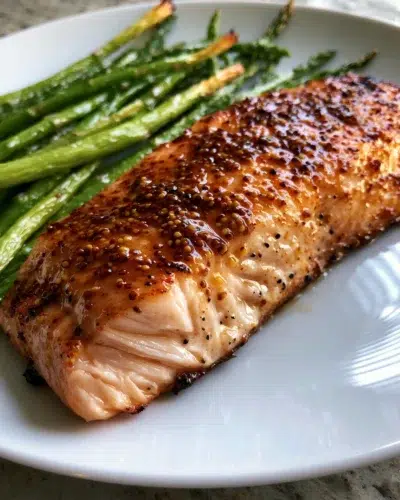
Salmon Asparagus Sheet Pan with Maple Mustard
- Total Time: 24
- Yield: 4 servings 1x
Description
Salmon Asparagus Sheet Pan with a sweet maple-mustard glaze is an easy spring dinner, tender salmon, crisp asparagus, and quick cleanup.
Ingredients
2 lb wild salmon (cut into portions if needed)
1 lb thin asparagus spears, trimmed
⅓ cup maple syrup
¼ cup whole grain mustard
2 tsp yellow mustard
1 tbsp olive oil
2 tsp prepared horseradish (optional)
1 pinch salt
1 pinch black pepper
Instructions
1. Preheat and prep the pan. Heat your oven to 425°F. Line a large sheet pan with parchment paper for easy cleanup.
2. Trim the asparagus and prep the salmon. Snap or cut off the woody ends of the asparagus, then spread the spears on a clean towel. Pat the salmon dry with paper towels and portion it if needed.
3. Whisk the glaze. In a small bowl, whisk together ⅓ cup maple syrup, ¼ cup whole grain mustard, 2 tsp yellow mustard, 1 tbsp olive oil, optional 2 tsp prepared horseradish, plus a pinch of salt and black pepper. Spoon out and reserve a little glaze for finishing at the table.
4. Arrange everything on the sheet pan. Place the salmon pieces skin-side down if they have skin. Add asparagus alongside, giving everything a little breathing room so it roasts instead of steams.
5. Brush on the glaze. Brush the glaze over the salmon first, then lightly over the asparagus.
6. Bake, then finish. Bake for about 10 to 14 minutes, depending on thickness, until the salmon is opaque at the edges and flakes easily. If you want a slightly more caramelized top, broil for 1 to 2 minutes at the end, watching closely so the glaze does not burn.
Notes
Reserve a spoonful of glaze for finishing. That last swipe at the table makes it feel like a “real” dinner, even on a Tuesday.
- Prep Time: 10
- Cook Time: 14
- Category: Dinner
- Method: Baked
- Cuisine: American
Nutrition
- Serving Size: 1 portion
- Calories: 450
- Sugar: 20
- Sodium: 600
- Fat: 25
- Saturated Fat: 4
- Unsaturated Fat: 18
- Trans Fat: 0
- Carbohydrates: 25
- Fiber: 3
- Protein: 40
- Cholesterol: 80