
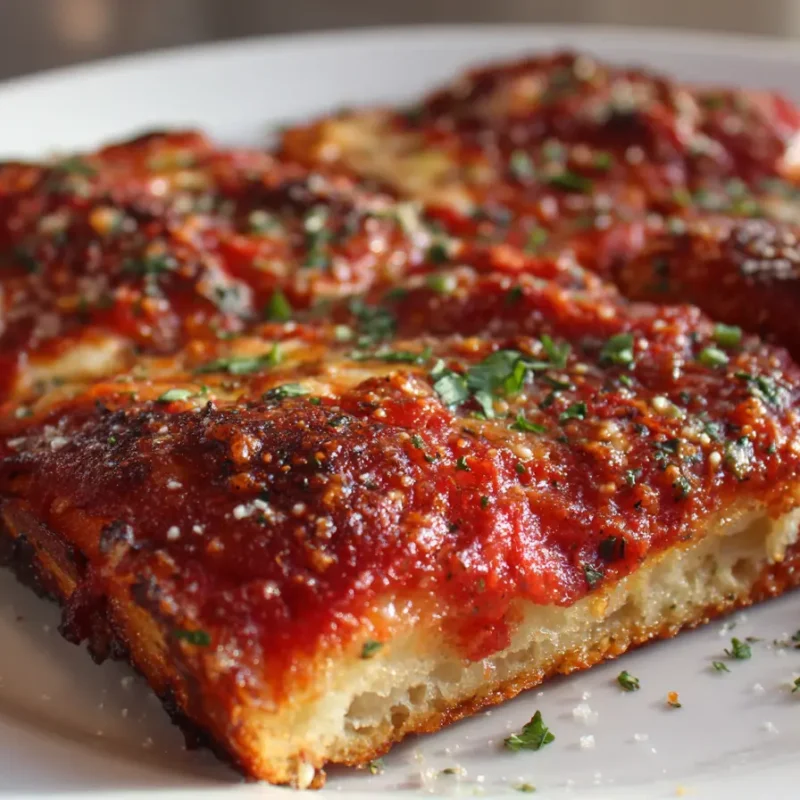
When I say New York Bakery-Style Sicilian Pizza, I’m talking about that warm square slice you grab from the corner bakery, the one that’s tall and airy in the middle, with a crisp, oily underside that crackles when you bite in. It’s bakery style pizza in the most comforting way, sturdy enough to hold in your hand, but still soft enough to feel like a little pillow of bread and cheese.
I still remember walking into a neighborhood bakery on a chilly New York afternoon, the glass case fogged up, the smell of tomato sauce and hot bread hitting me before I even reached the counter. The baker slid a square onto a paper plate, and that first bite had the best contrast, crunchy bottom, fluffy center, and that bright, garlicky sauce on top. This is the sheet pan Sicilian pizza I make at home when I want everyone hovering in the kitchen, “just checking” if it’s ready yet.
And yes, it’s a thick crust Sicilian pizza, but not heavy. The goal is tall, light, and sliceable into clean squares, the kind you can stack on a platter and watch disappear.
What Makes This Different From Regular Pan Pizza?
If you’ve ever had pan pizza that eats heavy (like you need a nap after two bites), here’s what changes everything in this Sicilian style pizza recipe. The dough is meant to feel higher-hydration and more elastic, it gets a longer rise, and the pan is generously oiled so the bottom almost “fries” into that bakery crunch.
Another big difference is timing. With a bakery pan approach, you’re not rushing the dough into shape. You let it relax in the pan, then stretch again, which helps keep that airy focaccia-like crust instead of pressing it into something dense.
- Bakery-style Sicilian: taller dough, longer rise, oil-forward crisp, light crumb
- Typical pan pizza: shorter rise, often drier dough, softer bottom, heavier bite
- Bakery pan mindset: dough relaxes before final stretch, sauce stays thick, cheese doesn’t swamp the center
Ingredients You’ll Need (And Why Each One Matters)
This homemade Sicilian pizza recipe keeps the ingredient list simple, but each piece has a job. When you’re making a Sicilian pizza recipe at home, the “why” matters because it’s what gets you that slice-shop texture without stress.
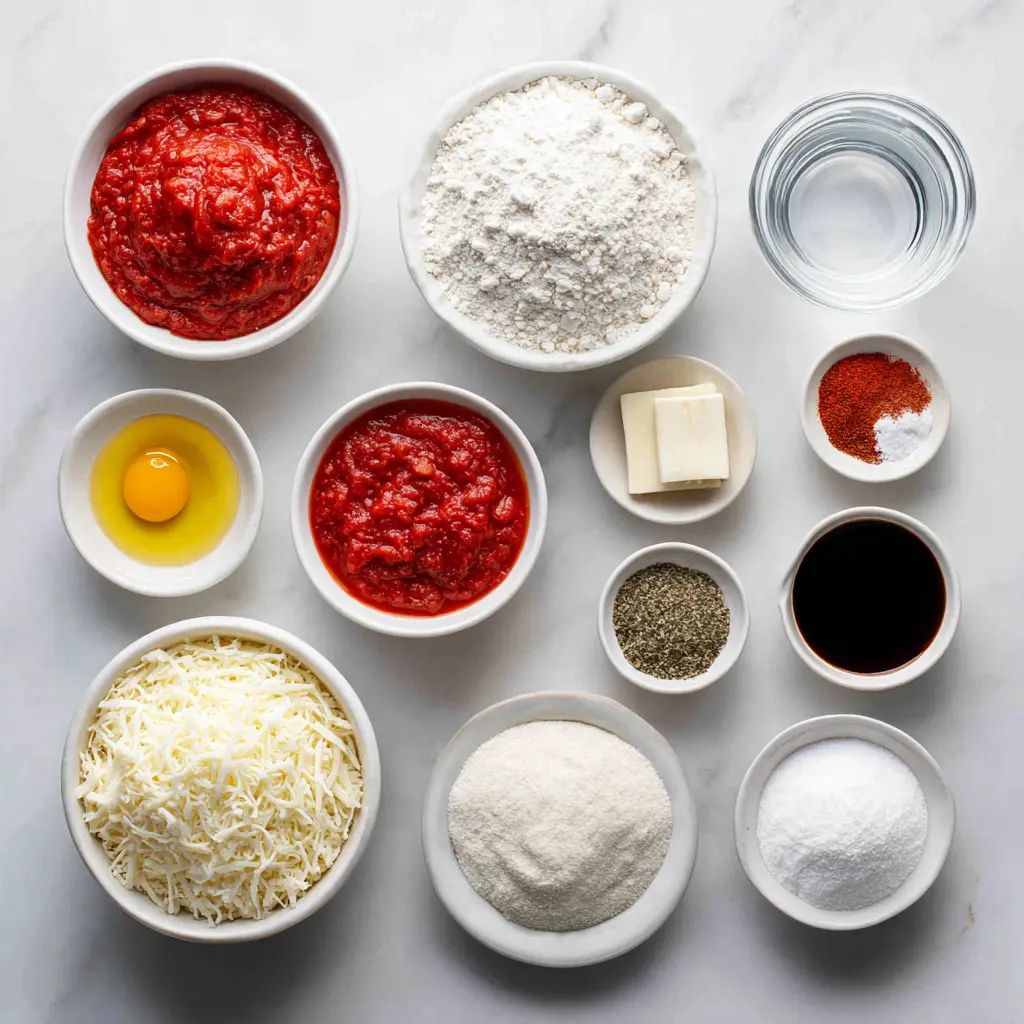
Dough
- Bread flour: My non-negotiable for that chewy structure and tall rise. It helps trap air for a thick crust Sicilian pizza that stays light.
- Warm water: Wakes up the yeast and keeps the dough supple.
- Active dry yeast + sugar: The sugar helps the yeast get moving and gives the dough a gentle balance.
- Salt: Flavor and strength, it keeps the dough from tasting flat.
- Olive oil: Adds tenderness inside and helps with that bakery-style crisp outside.
Sauce
- Crushed San Marzano tomatoes: Bright, classic tomato flavor, a great base for the best pizza sauce for Sicilian pizza.
- Garlic + oregano: That pizzeria aroma that makes the kitchen feel like a pizza counter.
- Red pepper flakes (optional): For a spicy Sicilian pizza vibe without overwhelming the kids.
Cheese
- Low-moisture mozzarella: The melt you want without puddles. This is the easiest way to avoid a soggy center.
- Parmesan: Salty, nutty boost, especially good along the edges.
- Parsley or basil (optional): A fresh finish that makes it feel bakery-pretty.
Exact Ingredient List
Dough
- 3 3/4 cups bread flour
- 1 1/2 cups warm water
- 2 1/4 teaspoons active dry yeast
- 1 tablespoon sugar
- 2 teaspoons salt
- 2 tablespoons olive oil, plus more for greasing the pan
Cheese + Toppings
- 3 cups low-moisture mozzarella cheese, shredded
- 1/4 cup grated Parmesan cheese
- 2 tablespoons chopped fresh parsley or basil (optional)
Sicilian Pizza Sauce
- 1 can (28 ounces) crushed San Marzano tomatoes
- 2 cloves garlic, minced
- 1 teaspoon dried oregano
- 1/2 teaspoon red pepper flakes (optional)
Dough Success Guide (Hydration Feel, Kneading Cues, Rise Checkpoints)
If you want that thick crust Sicilian pizza texture that’s airy instead of dense, the dough is where you win. And I promise, this can still be a quick & easy Sicilian pizza in the sense that the steps are simple. The dough just needs time to do its thing while you live your life, answer texts, fold laundry, or referee homework at the kitchen table.
The biggest cue I want you to remember is this: the dough should be tacky, not dry. After mixing, it’ll feel a little sticky, like it wants to cling to your fingers, then lets go. That’s perfect. If you keep adding flour to “fix” it, you’ll end up with a heavier crumb. I’ve done it, usually when I’m distracted and trying to multitask too hard.
As you knead (by hand or mixer), you’re looking for the dough to go from shaggy to smoother and elastic. It doesn’t have to be flawless and tight. It just needs to hold together, stretch without tearing right away, and feel alive, like it has a little bounce.
- You’re ready to start the first rise when: the dough is cohesive and elastic, still slightly tacky
- You’re ready to move it to the pan when: it has clearly expanded and looks puffy
- You’re ready to bake when: it’s very pillowy in the pan, with bubbles forming under the surface
- You’re doing great if: your dough leaves a gentle fingertip dent instead of snapping right back
This pan pizza recipe is forgiving. Even if your rise time runs long because life happened, it usually bakes up beautifully, sometimes even better.
Sicilian Pizza Sauce Spotlight (Bold, Garlicky, Thick Enough to Stay Put)
Let’s talk Sicilian Pizza Sauce, because this is where the whole pizza starts smelling like New York. The garlic and oregano hit the air, and suddenly everyone in my house “needs” to walk through the kitchen. It’s the sauce that makes this feel like a real bakery style pizza, even if you’re wearing sweatpants and your counters are covered in school papers.
The key is consistency. You want it thick enough to sit on top of the dough without running to the edges. My favorite little test is the spoon trail test. Stir the sauce, then drag a spoon through it. It should leave a brief trail before the sauce settles back. If it floods in immediately, it’s too watery and more likely to seep into the crust.
Two quick options:
- No-cook quick sauce: Mix crushed tomatoes with garlic, oregano, salt (to taste), and red pepper flakes. Best when your tomatoes are already thick.
- Simmered thicker sauce: Simmer the tomatoes with garlic and oregano for 10 to 20 minutes to tighten it up. This is my pick when I want the best pizza sauce for Sicilian pizza and my can looks a little loose.
If you like a spicy Sicilian pizza, the red pepper flakes are your friend. I usually keep it mild in the sauce, then sprinkle extra on my own slices after baking.
Cheese Strategy (Melt, Browning, and No Soggy Center)
The moment the cheese blisters is when everyone wanders back into the kitchen. Thick crust needs real heat to drive off steam, so the cheese strategy matters more than you’d think.
- Use low-moisture mozzarella: It melts beautifully without watering out the center.
- Don’t overload: Thick crust Sicilian pizza can handle toppings, but too much cheese traps steam and turns the middle wet.
- Spread evenly to the edges: Those crispy, cheesy edges are part of the bakery style pizza charm.
- Timing matters: If your oven runs cool, consider baking the dough with sauce first for a few minutes, then add mozzarella. It helps prevent a pale top and a soggy center.
Parmesan is my little finishing move. It browns fast and adds that salty “pizza shop” flavor.
Pan Technique (Oil, Pan Size, and That Signature Crispy Underside)
The pan is not just a container here, it’s a cooking tool. The oil is what gives sheet pan Sicilian pizza that signature crisp bottom. In my house, Noah always calls dibs on the corner piece because it has the deepest crunch. And honestly, he’s right. When you lift a slice and tap the bottom, it should sound firm and crisp, not soft and bendy.
The trick that helps you get a taller, airier crust is a two-stage pan stretch. You oil the pan, press the dough out as far as it comfortably goes, then let it rest. After 10 to 15 minutes, it relaxes and stretches farther without tearing. That rest keeps those airy pockets intact.
Pan size guide:
- 9×13-inch pan: thicker, taller squares, very bakery-pan feel
- Half-sheet pan (about 13×18): slightly thinner, still classic, great for a crowd
Whichever you use, don’t skimp on greasing. That’s how you get the pan pizza recipe crunch instead of a stuck, sad bottom.
How to Make New York Bakery-Style Sicilian Pizza (Step-by-Step)
This is the calm kitchen rhythm version. Nothing fancy, just clear steps and a few little checkpoints so you feel confident the whole way through. This New York Bakery-Style Sicilian Pizza is the homemade Sicilian pizza recipe I pull out when I want something classic, filling, and guaranteed to make everyone wander into the kitchen.
Activate the yeast. In a large bowl, stir warm water, sugar, and active dry yeast. Let it sit for 5 to 10 minutes until foamy. If it doesn’t foam, your water may be too hot or your yeast may be old.
Mix the dough. Add bread flour, salt, and olive oil. Stir until a shaggy dough forms, then knead until it becomes smoother and elastic, about 8 to 10 minutes by hand or 6 to 8 minutes in a mixer. The dough should be tacky, not dry. Resist the urge to keep adding flour.
First rise. Lightly oil a bowl, place the dough inside, and cover. Let rise in a warm spot until doubled and puffy, usually 1 1/2 to 2 1/2 hours depending on your kitchen. Watch the dough, not the clock.
Make the Sicilian pizza sauce. In a saucepan, combine crushed tomatoes, minced garlic, oregano, and red pepper flakes (if using). Simmer uncovered 10 to 20 minutes until thick enough to pass the spoon trail test. Let cool slightly. Thicker sauce equals less soggy crust.
Prep the bakery pan. Generously grease your pan with olive oil, including corners and sides. This is what gives that crisp bottom.
First pan stretch (stage one). Place the dough in the oiled pan. Gently press it outward with your fingertips. If it springs back, stop. Cover and rest 10 to 15 minutes. If dough springs back, rest 10 minutes.
Second pan stretch (stage two). After resting, press again until the dough reaches the edges. Be gentle, you want to keep those air pockets. Cover and let rise in the pan until very puffy, 45 to 75 minutes.
Preheat the oven. Heat to 450°F. Place a rack in the lower third of the oven for better bottom crisping.
Sauce and cheese. Spoon the Sicilian Pizza Sauce over the dough and spread gently. Sprinkle mozzarella evenly, then Parmesan. Keep toppings balanced so the center bakes through.
Bake. Bake 18 to 25 minutes, until the cheese is bubbly and browned in spots and the edges look crisp. If you’re unsure, lift a corner with a spatula and check that the bottom is deeply golden.
Cool, then slice. Let the pizza cool in the pan 10 minutes, then transfer to a cutting board and cool another 5 minutes before slicing into squares. This is the hardest 10 minutes, but it’s the cool-then-slice rule that keeps the cheese from sliding and gives you clean bakery-style squares.
Eva’s Note: If you want a different crust style for another night, I also keep this one in my back pocket for a change of pace: high-protein chicken crust pizza.
Make-Ahead, Freezer, and Party Plan (Keep It Crisp and Sliceable)
This is the part I rely on when life is busy and I still want “homemade pizza night” to feel doable. With a little planning, this can be a quick & easy Sicilian pizza experience, even on a day that’s already full.
I’ve done this for casual birthday parties where I set out a board of squares and the kids circle it like little sharks. My timing trick is simple: do the slow work earlier, then bake close to serving so the bottom stays crisp and the cheese stays glossy.
- Same-day plan: Make dough in the morning, let it rise, stretch into the pan mid-afternoon, bake at dinner.
- Next-day plan (make-ahead Sicilian pizza dough): After mixing, cover and refrigerate the dough overnight. Let it sit at room temperature 60 to 90 minutes before pressing into the oiled pan, then do the pan rise as usual.
- Freezer plan: Bake fully, cool completely, slice, then freeze squares in a single layer. Once frozen, stack with parchment in a freezer bag.
Reheating to keep bottom crisp: Reheat slices on a sheet pan in a 400°F oven until hot and crisp, usually 8 to 12 minutes. For extra crisp, preheat the sheet pan first, then add slices.
If you want a simpler bake-style alternative for another night, this one is cozy and very weeknight-friendly: pizza cottage cheese bake.
Troubleshooting (Gummy Center, Pale Top, Soggy Bottom, Sauce Sliding)
I’ve had every one of these happen at least once, usually on a night when I thought I could do five things at once. The good news is this method is forgiving, and most fixes are simple once you know the cause.
- Problem: Gummy center
Cause: Under-proofed dough or too much topping trapping steam
Fix: Let the dough get very puffy in the pan before baking, and keep cheese balanced. - Problem: Pale top
Cause: Oven runs cool or rack too low for too long
Fix: Move to the middle rack for the last 3 to 5 minutes, or add cheese a bit later next time. - Problem: Soggy bottom
Cause: Not enough oil in the pan or oven not hot enough
Fix: Grease more generously and bake on the lower third rack. Make sure the oven is fully preheated. - Problem: Sauce sliding or soaking in
Cause: Sauce is too watery
Fix: Use the spoon trail test, simmer uncovered to thicken Sicilian pizza sauce, or drain a little liquid before seasoning. - Problem: Dense dough, not airy and fluffy crust
Cause: Too much flour added during mixing or not enough rise time
Fix: Keep the dough tacky, not dry, and give it a full rise until pillowy.
Frequently Asked Questions about New York Bakery-Style Sicilian Pizza
Q: What makes New York Bakery-Style Sicilian Pizza different from regular pan pizza?
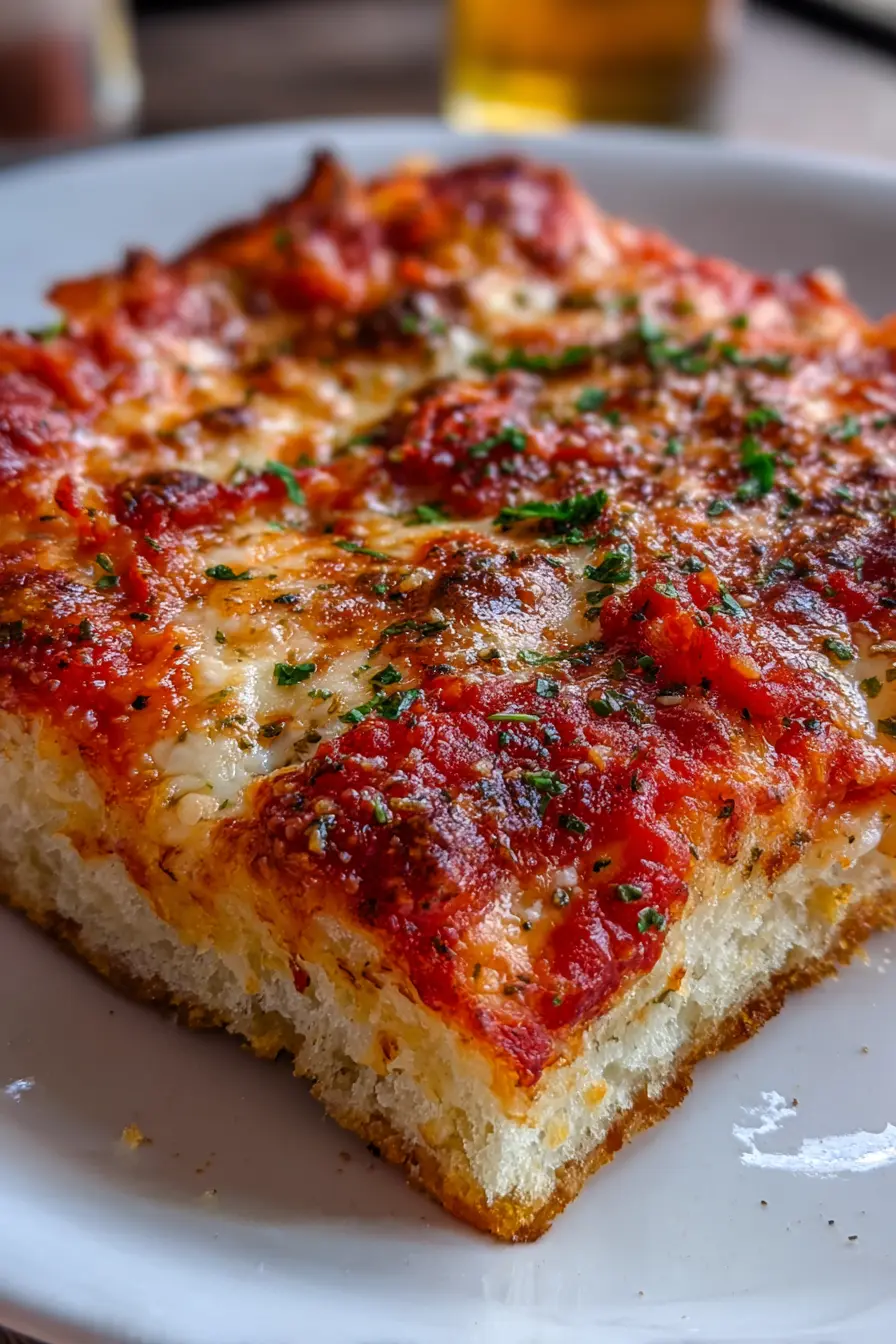
Answer: It’s defined by a taller, airy, focaccia-like crumb and a crisp, well-oiled underside that fries slightly in the pan. The dough is typically given more time to rise and relax, which helps it bake up light rather than bready and heavy. The sauce and cheese are also handled with a “thick-crust” mindset, enough to taste bold, but not so much that it weighs the center down.
In my house, the corner slice is the prize because it has the deepest crunch. You can actually hear it when you bite in, and that’s how I know it’s bakery-right.
Q: What’s the best Sicilian pizza sauce for a thick-crust Sicilian pie?
Answer: A bold tomato sauce that’s thick enough to stay put and concentrated enough to shine over a fluffy crust works best. Crushed San Marzano-style tomatoes with garlic and oregano are a reliable base. If your tomatoes are very loose, a brief simmer can tighten the texture and deepen flavor so the sauce doesn’t seep into the crumb.
The oregano-garlic aroma hits the warm crust the second it comes out, and it smells like you walked into a real bakery counter.
Q: Can I use all-purpose flour instead of bread flour for New York Bakery-Style Sicilian Pizza?
Answer: Yes, all-purpose flour can work. Bread flour gives a chewier structure and helps the dough hold onto gas bubbles for a taller rise, but all-purpose flour still makes a great sheet pan Sicilian pizza. If using all-purpose, focus on gentle handling and a full rise so the dough stays light and doesn’t bake up dense.
I notice the dough feels a bit softer and more delicate when I stretch it, so I take my time and let it rest if it fights me.
Q: How do I make the crust extra airy and fluffy (focaccia-like) without it turning dense?
Answer: Aim for a slightly tacky dough, avoid adding lots of extra flour during mixing, and give it enough time to rise until visibly puffy. Handle it gently when pressing into the pan, think “press and coax,” not “push all the air out.” A short rest in the pan before the final stretch helps the dough relax and keeps those air pockets intact.
I look for small bubbles under the surface and a dough that feels alive, like it has a little spring and softness at the same time.
Q: How long should Sicilian pizza dough rise for the best texture?
Answer: Rise time depends on room temperature and yeast activity, but the goal is dough that has clearly expanded and looks airy. Many home kitchens need a couple of hours for the first rise, plus additional time after the dough is in the oiled pan to become very puffy before baking. Watch the dough, not the clock: it should look pillowy and hold a gentle fingertip impression.
My favorite rise spot is the quiet corner of my kitchen, away from drafts. When it’s ready, it looks like it’s wearing a soft little blanket of air.
Q: How do I thicken Sicilian pizza sauce if it’s too watery?
Answer: Simmer it uncovered to evaporate excess moisture, stirring occasionally, until it coats a spoon and doesn’t run quickly when spread. You can also drain off a little liquid from the can before seasoning. A thicker sauce helps prevent soggy spots and keeps the topping layer stable on a thick crust Sicilian pizza.
You’ll actually see it change from soupy to spoonable as it gently bubbles, and that’s your cue you’re close.
Q: Can I make New York Bakery-Style Sicilian Pizza ahead of time and bake later?
Answer: Yes. You can make the dough ahead and let it rise slowly in the refrigerator, then bring it back toward room temperature before stretching into the pan. Another option is to assemble in the pan and give it a final rise, then bake when you’re close to serving. For the freshest texture, bake the day you want to eat it, but the make-ahead dough approach is very party-friendly.
My “company’s coming” trick is making the dough the night before, then doing the pan rise while I’m setting out plates and cutting fruit. It keeps the kitchen calm.
Q: How do I store leftover Sicilian pizza, and how long does it keep?
Answer: Cool slices completely, then store in an airtight container in the refrigerator. It keeps well for several days. For longer storage, freeze individual squares so you can reheat just what you need. Keeping slices in a single layer (or separated with parchment) helps preserve the crust texture.
I’m not above a late-night square reheated when I want something cozy and filling, especially when the house is finally quiet.
Q: What’s the best way to reheat Sicilian pizza so the bottom stays crisp?
Answer: Reheat in a hot oven or toaster oven on a sheet pan so the crust re-crisps as it warms through. For an extra-crisp bottom, preheat the pan briefly before adding slices. Avoid trapping steam during reheating, which can soften the underside.
That moment when the bottom turns crisp again and the cheese gets glossy feels like a tiny kitchen victory.
Q: How can I keep Sicilian pizza warm for a party (oven timing tips)?
Answer: Keep slices warm in a low oven (around 200°F) on a wire rack set over a sheet pan so air can circulate and the bottoms stay crisp. If you don’t have a rack, use a sheet pan and keep the oven door cracked for a minute now and then to let steam escape. Bake close to serving time when you can, since bakery-pan pizza is at its best fresh and crisp.
When my living room is full, I keep a small rotation going, one pan out on the board, one pan warming, and it keeps everyone happy without soggy bottoms.
If you’re planning a lower-carb pizza night for some guests, this one is a helpful option to have on hand: low-carb pizza casserole.
If you’ve been craving that bakery-pan square with the crisp bottom and airy focaccia-like middle, I hope this New York Bakery-Style Sicilian Pizza brings that New York comfort right into your kitchen. It’s the kind of thick crust Sicilian pizza that makes a regular night feel special, and the leftovers reheat like a dream when you do it the crisp way.
Thank you for cooking with me today, it means more than you know.
Come hang out with me on Pinterest for more cozy, family-friendly recipes.
Print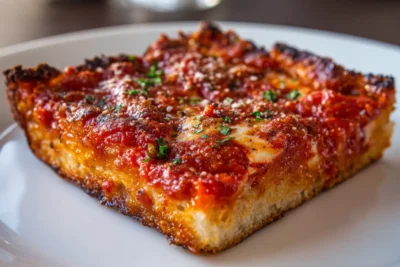
New York Bakery-Style Sicilian Pizza (Bakery Pan)
- Total Time: 3 hours
- Yield: 8 servings 1x
- Diet: Vegetarian
Description
Make New York Bakery-Style Sicilian Pizza with fluffy focaccia-like crust, bold Sicilian pizza sauce, and bubbly mozzarella. It’s easy, classic, and sliceable.
Ingredients
3 3/4 cups bread flour
1 1/2 cups warm water
2 1/4 teaspoons active dry yeast
1 tablespoon sugar
2 teaspoons salt
2 tablespoons olive oil, plus more for greasing the pan
3 cups low-moisture mozzarella cheese, shredded
1/4 cup grated Parmesan cheese
2 tablespoons chopped fresh parsley or basil (optional)
1 can (28 ounces) crushed San Marzano tomatoes
2 cloves garlic, minced
1 teaspoon dried oregano
1/2 teaspoon red pepper flakes (optional)
Instructions
1. Activate the yeast. In a large bowl, stir warm water, sugar, and active dry yeast. Let it sit for 5 to 10 minutes until foamy.
2. Mix the dough. Add bread flour, salt, and olive oil. Stir until a shaggy dough forms, then knead until it becomes smoother and elastic, about 8 to 10 minutes by hand or 6 to 8 minutes in a mixer.
3. First rise. Lightly oil a bowl, place the dough inside, and cover. Let rise in a warm spot until doubled and puffy, usually 1 1/2 to 2 1/2 hours.
4. Make the Sicilian pizza sauce. In a saucepan, combine crushed tomatoes, minced garlic, oregano, and red pepper flakes (if using). Simmer uncovered 10 to 20 minutes until thick.
5. Prep the bakery pan. Generously grease your pan with olive oil, including corners and sides.
6. First pan stretch (stage one). Place the dough in the oiled pan. Gently press it outward with your fingertips. If it springs back, stop. Cover and rest 10 to 15 minutes.
7. Second pan stretch (stage two). After resting, press again until the dough reaches the edges. Cover and let rise in the pan until very puffy, 45 to 75 minutes.
8. Preheat the oven. Heat to 450°F. Place a rack in the lower third of the oven.
9. Sauce and cheese. Spoon the Sicilian Pizza Sauce over the dough and spread gently. Sprinkle mozzarella evenly, then Parmesan.
10. Bake. Bake 18 to 25 minutes, until the cheese is bubbly and browned in spots and the edges look crisp.
11. Cool, then slice. Let the pizza cool in the pan 10 minutes, then transfer to a cutting board and cool another 5 minutes before slicing into squares.
Notes
For a spicy Sicilian pizza vibe, add red pepper flakes to taste.
Reheat slices on a sheet pan in a 400°F oven until hot and crisp, usually 8 to 12 minutes.
- Prep Time: 30 minutes
- Cook Time: 25 minutes
- Category: Dinner
- Method: Baked
- Cuisine: Italian
Nutrition
- Serving Size: 1 slice
- Calories: 320
- Sugar: 4
- Sodium: 680
- Fat: 14
- Saturated Fat: 6
- Unsaturated Fat: 7
- Trans Fat: 0
- Carbohydrates: 36
- Fiber: 2
- Protein: 14
- Cholesterol: 30