
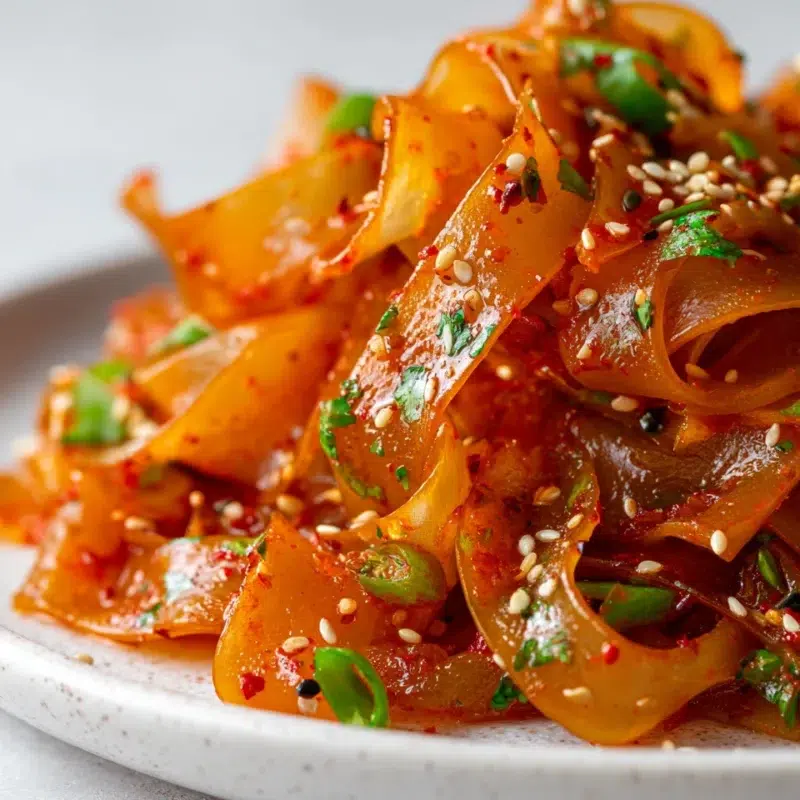
On those busy nights when everyone is hungry and my brain feels like it has 17 tabs open, I reach for this bowl. Gochujang Chili Oil Rice Paper Noodles come together fast, but they still feel special, like the kind of “Pinterest recipe” you saved for later and actually made on a Tuesday.
The first time I fell hard for the spicy-sweet combo of gochujang, garlic, and sesame, it was honestly the smell that got me. Warm oil, a little chili, a little garlic, and suddenly the whole kitchen feels awake. These noodles are tender and chewy with a glossy sauce that clings in the best way. It’s an easy rice noodle recipe that looks impressive, even if you’re making it in leggings with homework on the counter.
- Fast: ready in about 20 minutes
- Big flavor: spicy-sweet, savory, nutty
- Flexible: great for “clean out the fridge” rice noodle ideas
- Fun texture: spicy rice paper noodles that feel like magic
What Are Rice Paper Noodles?
Rice paper noodles are exactly what they sound like, except they’re a little bit magical. Instead of using a package of dried noodles, you take rice paper sheets (the kind used for fresh spring rolls), soften them briefly, stack them, and slice them into ribbons.
The result is a noodle that’s tender, slippery, and pleasantly chewy. My kids call them “ribbon noodles,” and the first time I made them, Emma stared at the cutting board like I was doing a craft project. They’re perfect for punchy sauces because they soak up flavor fast, which is why they work so well in spicy rice paper noodles and other rice and noodles recipes.
Texture Check: You’re aiming for noodles that are soft and bendy, not mushy, with a little chew. Think “silky ribbons,” not “pudding.”
Flavor Profile: Gochujang + Sesame + Garlic (And How to Adjust the Heat)
This sauce is my favorite kind of comfort, bold but balanced. Gochujang brings that signature spicy-sweet depth (it’s a fermented chili paste, so it tastes richer than plain hot sauce). Then sesame seeds add a toasty nuttiness, and garlic makes everything smell like you actually planned dinner.
When the sesame and garlic hit warm oil, it’s one of those kitchen moments that makes you exhale. I’ve cooked in a lot of different places in my life, and that “toasty garlic + sesame” smell always feels universal. It’s the same cozy vibe I chase in sesame garlic noodles, just with a gochujang twist that makes it feel exciting.
I also love that you can tailor the heat depending on who’s at your table. Noah likes it spicy, Lily likes it medium, and Emma wants “spicy but not spicy,” which is… a daily negotiation.
- Make it milder: use less chili flakes, add an extra teaspoon of sugar, and add a splash more warm water or broth.
- Make it medium: follow the recipe as written, then finish with sesame oil for a rounder flavor.
- Make it extra spicy: add more chili flakes and a touch more gochujang, then taste and salt at the end.
This is the kind of sauce that makes gochujang noodles and chili oil noodles feel like a big treat, without a lot of work.
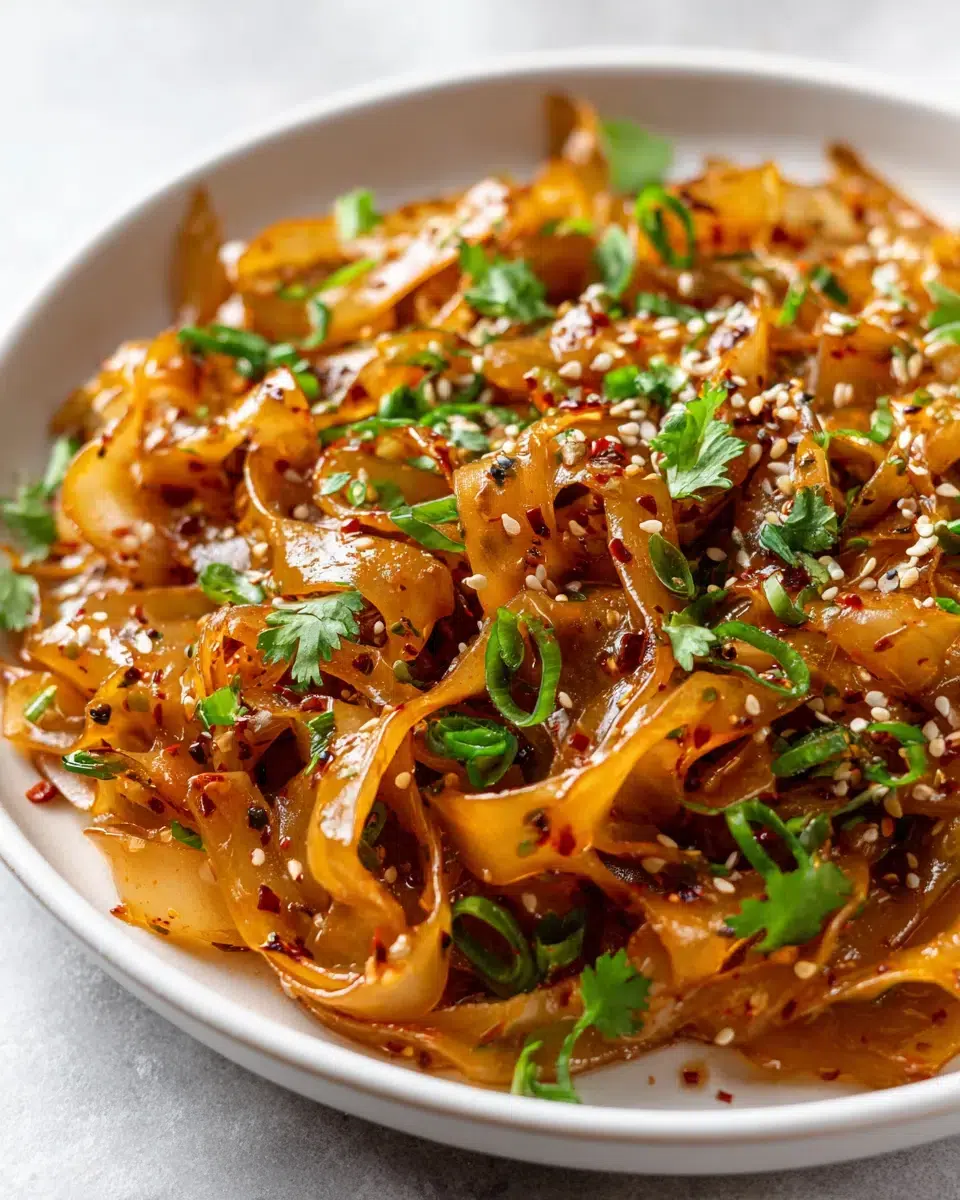
Ingredients You’ll Need
This ingredient list is short, pantry-friendly, and weeknight realistic. If you’ve ever googled recipes rice noodles or easy rice noodle recipe ideas while staring into your fridge, this one’s for you.
- 2–3 tablespoons avocado oil, the base for blooming the aromatics without burning.
- ½ tablespoon red chili flakes, for heat and that “chili oil noodles” vibe.
- 1 small clove garlic, minced, the heart of the flavor.
- 1 tablespoon green onions, chopped, for freshness and a little bite.
- 1 tablespoon sesame seeds, toasty crunch and nutty flavor.
- 1 teaspoon granulated sugar, to balance gochujang’s heat and bring out the sweet.
- 1 tablespoon gochujang, spicy-sweet depth (the main character).
- 2 tablespoons soy sauce, salty umami backbone.
- 3 tablespoons warm water or chicken broth, to loosen the sauce and help it coat.
- Salt, to taste, because soy sauce brands vary.
- 8 sheets rice paper, sliced into noodle ribbons.
- Cilantro, chopped (for garnish), bright and fresh at the end.
Garnish = not optional: Even if you keep it simple, don’t skip the cilantro and sesame. That fresh-topped finish is what makes this bowl feel complete.
Optional variations: toasted sesame oil for finishing, grated ginger for warmth, cucumber or carrots for crunch, baby spinach for volume, and pan-seared tofu or shredded chicken to make it a full meal (hello, recipes with rice vegetarian options and flexible add-ins).
How to Make Gochujang Chili Oil Rice Paper Noodles (Step-by-Step)
If you’ve ever looked up “How To Make Thai Rice Noodles,” the rhythm here will feel familiar, quick prep, fast sauce, then toss and eat. The difference is we’re making noodles from rice paper, so the timing is even more important. Think of it like a simple noodle-bowl moment that fits right in with simple Japanese food recipes vibes, easy, cozy, and meant to be eaten right away.
- Set up your station. Grab a cutting board, a large bowl for tossing, tongs, and a shallow dish or pie plate for dipping rice paper. Have everything ready because once rice paper softens, it’s go-time.
- Warm your water or broth. You want it warm, not boiling. This helps the sauce blend smoothly and keeps everything glossy.
Eva’s Tip: When I’m feeling rushed, I tell myself, “Calm hands make better noodles.” Rice paper can feel sticky at first, but it settles down once it’s sliced and lightly coated.
Make the quick chili-sesame oil base
- Bloom the aromatics gently. In a small pan over medium-low heat, warm the avocado oil. Add chili flakes, garlic, green onions, and sesame seeds. Stir constantly for 30–60 seconds, just until fragrant and toasty.
You’re not frying hard, you’re waking up the garlic and chili so the kitchen smells amazing without turning bitter. If the garlic starts browning fast, pull the pan off the heat and keep stirring.
- Stir in the sugar. Let it dissolve into the warm oil mixture.
Eva’s Tip: Keep the heat moderate. The goal is “toasty and fragrant,” not “scorched and sad.”
Whisk the gochujang sauce until glossy
- Build the sauce. In a bowl, whisk together gochujang, soy sauce, and warm water or broth. Then whisk in your warm chili-sesame oil base until smooth and glossy.
Glossy is the goal. When it looks shiny and coats a spoon like a light glaze, it’ll cling to every noodle ribbon, which is exactly what you want for gochujang noodles.
Sauce Consistency:
- Thick: coats the spoon heavily, may need a splash more warm water or broth.
- Perfect: glossy, pourable, clings like a thin glaze.
- Thin: watery and runny, simmer 30–60 seconds or add a small spoonful more gochujang.
Prep rice paper into noodles (soak, stack, slice)
- Dip, don’t soak. Dip one rice paper sheet into room-temperature water for about 5–8 seconds, then lay it flat on a cutting board. Let it rest for 20–30 seconds to finish softening.
The first time I tried this, I soaked the rice paper too long and ended up with a sticky situation that felt like I was wrestling a wet napkin. A quick dip and a short rest is the sweet spot.
- Soak timing: 5–8 seconds in water, then rest on the board.
- Stacking: stack 2–3 softened sheets at a time once they’re pliable.
- Slicing width: cut into ½-inch ribbons for a noodle feel that’s easy to toss.
- Slice into ribbons. Use a sharp knife to cut the stacked rice paper into noodle-like strips. Repeat until you’ve used all 8 sheets.
Eva’s Tip: If the stack starts sticking, lightly wipe your knife with a bit of oil. It makes slicing feel calmer and cleaner.
Toss, finish, and garnish
- Toss gently. Add the rice paper noodles to a large bowl. Pour in a little sauce first and toss gently with tongs to separate. Then add more sauce until everything is coated.
Starting small helps the noodles separate. Once they’re coated, they behave.
- Finish and garnish. Taste and add salt if needed. Top with cilantro and extra sesame seeds if you like. If using toasted sesame oil, add 1–2 teaspoons at the end for a fragrant finish.
Serve immediately for best texture: This is one of those big meal recipes that’s at its peak right after tossing.
Eva’s Tip: If your noodles look clumpy at first, keep tossing gently for 20–30 seconds. There’s always a “first toss” moment where they go from messy to silky.
Rice Paper Noodle Prep Tips (No Clumps, No Stress)
Rice paper noodles are simple, but they do have feelings. I learned this the hard way the night I tried to “get ahead” by soaking all the sheets at once. Spoiler: they became one giant sticky sheet, and dinner turned into a snack plate.
- Keep rice paper moving, not soaking: a quick dip, a short rest, then slice. Rice paper is happiest when you treat it gently and don’t leave it lounging in water.
- Work in small stacks: 2–3 sheets at a time makes slicing easier and prevents a gluey pile.
- Coat early: toss noodles with a little sauce (or a tiny drizzle of oil) before adding the rest to prevent sticking.
- Don’t over-handle: rice paper tears when you tug. Use tongs and lift, don’t mash.
- Serve quickly: these spicy rice paper noodles are best right after mixing.
“Gentle toss, quick serve.”
If you’re collecting recipes rice noodles for your rotation, this one is worth it, just respect the timing and you’ll be golden.
Make It a Big Meal Bowl (Best Proteins + Veggies)
This is where the bowl becomes dinner. On “clean-out-the-fridge” nights, I’ll set the noodles in the middle of the table and let everyone top their own. The spicy-sweet noodles love cool, crisp veggies, and a little protein makes it feel like one of those big meal recipes that actually keeps you full.
If you want a vegetarian dinner that feels hearty, this one is a winner for recipes with rice vegetarian style cooking, even though it’s technically rice paper. It fits right into that cozy category of rice and noodles recipes where you can mix and match what you’ve got.
- Proteins:
- Pan-seared tofu (my favorite)
- Shredded chicken
- A quick-cooked egg (soft scrambled or fried)
- Vegetables & Crunch:
- Sliced cucumber
- Shredded carrots
- Baby spinach
- Shredded cabbage
- Bell pepper strips
- Extra scallions and sesame seeds
If you want a really satisfying tofu option, try my crispy honey garlic tofu alongside or tucked right into the bowl.
What to Serve with Gochujang Chili Oil Rice Paper Noodles
I love serving this family-style: one big bowl of noodles, one crisp side, and everyone builds their perfect bite. A cool, crunchy side balances the spice and richness and makes the whole meal feel a little more put together (even when it’s not).
- A crisp cucumber salad, like my Japanese cucumber salad
- A warm veggie side, like bok choy with ginger chili sauce
- Simple steamed edamame with salt
- Quick sautéed greens with garlic
It’s that simple Japanese food recipes feeling, clean sides, bold noodles, and a table that looks like you tried (even if you didn’t).
Storage, Make-Ahead, and Reheating (Keeping the Texture Right)
These noodles are best fresh, no question. Rice paper keeps softening as it sits, so leftovers can get a little sticky. That said, real life is real life, and I still pack them for lunch sometimes. The trick is separating components so you can refresh everything later.
- Store noodles: If already mixed, keep in an airtight container and eat within 24 hours. Add a small extra spoonful of sauce before storing to help prevent drying.
- Store sauce: Keep sauce in a separate container for up to 4 days in the fridge. Stir before using.
- Store toppings: Keep cilantro and crunchy veggies separate, then add right before eating.
For make-ahead rice paper noodles, I recommend prepping the sauce and slicing veggies in advance, then slicing rice paper close to serving time. It keeps the texture closer to that just-made bite, which is the whole point of this easy rice noodle recipe.
Reheating: Reheat gently in a skillet over low heat with a splash of warm water or broth, tossing constantly until loosened. Avoid high heat or long microwaving, which can make the noodles gummy. Finish with fresh cilantro and sesame to bring it back to life.
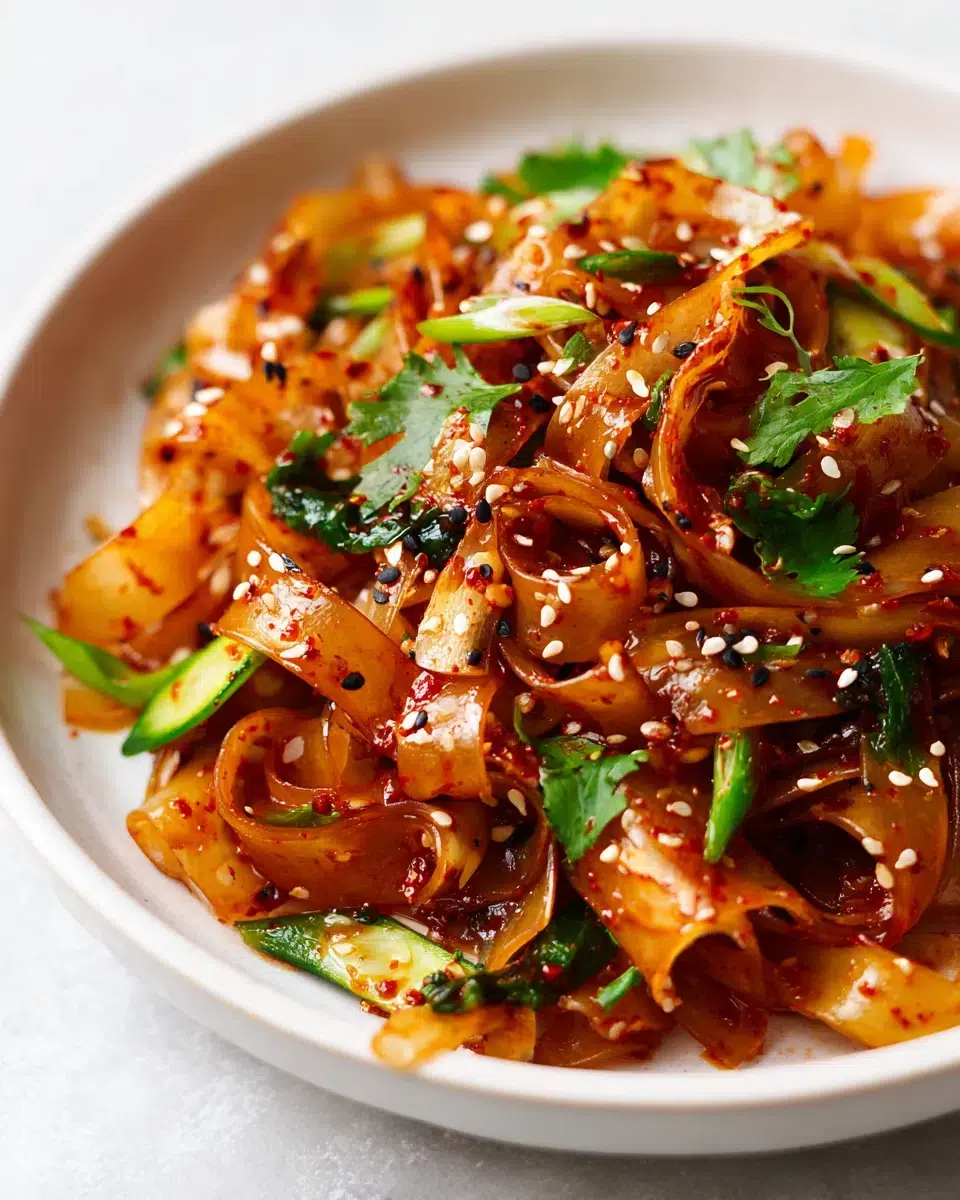
Frequently Asked Questions about Gochujang Chili Oil Rice Paper Noodles
Q: How do you make rice paper noodles without them sticking together?
Answer: Dip each rice paper sheet briefly, let it soften on a board for a moment, then stack and slice into ribbons. Lightly coat the ribbons with a bit of sauce (or a tiny drizzle of oil) before adding the rest, this creates a slippery barrier so they don’t glue together. Toss gently with tongs and serve soon after mixing for the best separation. The “first toss” moment is real, clumpy turns to silky if you keep it gentle.
Q: Can I substitute gochujang with another spicy sauce?
Answer: Yes, choose a spicy sauce with some sweetness and body so it clings to noodles. Start with a smaller amount, taste, and adjust with a pinch of sugar and a splash of warm water or broth until the balance feels right. The goal is a spicy-sweet, savory sauce that coats rather than puddles. To keep it family-friendly, dial the heat down and lean into sesame and garlic for flavor.
Q: What’s the best way to thicken the gochujang chili oil sauce if it’s watery?
Answer: Simmer the sauce for 30–60 seconds to reduce and concentrate it, whisking so it stays smooth. If it still feels thin, stir in a small spoonful more gochujang or a pinch of sugar to help it cling. Add liquid slowly next time, rice paper releases a little moisture as you toss, which can thin the sauce. I look for sauce that “laces” the noodles instead of pooling at the bottom.
Q: Can I make these rice paper noodles ahead of time, and how do I store them?
Answer: You can prep components ahead: mix the sauce and chop garnishes, then store separately. For best texture, slice rice paper noodles close to serving time. If you do store mixed noodles, keep them in an airtight container with a small extra spoonful of sauce, and eat within 24 hours for the nicest bite. My lunchbox routine is sauce in a small container, herbs on top, crunch tucked on the side.
Q: How do you reheat rice paper noodles without them turning gummy?
Answer: Reheat gently and briefly. Add a small splash of warm water or broth, then warm in a skillet over low heat just until loosened, tossing constantly. Avoid high heat or long microwaving, which can make the noodles overly soft. Finish with fresh herbs and sesame to bring back that just-made feel. You’ll know they’re ready when the noodles turn flexible again and stop looking stiff.
Q: Can I make gochujang chili oil noodles gluten-free?
Answer: Yes, rice paper is naturally gluten-free, so the key is using gluten-free gochujang and swapping soy sauce for a certified gluten-free tamari. Double-check labels on chili flakes and any packaged toppings. The method stays the same, you’re just making sure the condiments match your needs. When I cook for friends, I do a quick label check before I even start cooking, it saves stress later.
Q: Can you cook rice paper noodles in a slow cooker, and how long would it take?
Answer: Rice paper noodles aren’t a great fit for a slow cooker because they soften very quickly and can turn mushy if held warm for long. If you’re using a slow cooker for a meal, keep the sauce warm in it and prep the rice paper noodles fresh right before serving, then toss together in a bowl. For a party setup, I’d keep warm sauce ready and let everyone build their own bowl.
Q: What proteins or vegetables go well with gochujang rice paper noodles?
Answer: Great pairings include tofu, shredded chicken, or a quick-cooked egg for protein. For vegetables, go for crisp and refreshing: cucumber, shredded carrots, cabbage, bell pepper, or baby greens. Add crunch with sesame seeds and extra scallions, and finish with cilantro for a bright lift. My favorite balance is cool cucumber and carrots piled on top of spicy noodles, it makes every bite feel fresh.
If you’re craving a bowl that feels cozy, spicy, and a little exciting, these Gochujang Chili Oil Rice Paper Noodles are it. Keep it simple, toss gently, and don’t overthink it, this is one of those rice noodle ideas that’s meant to make your night easier and tastier.
Thank you for cooking with me, it means more than you know.
Please come hang out with me on Pinterest for more cozy, weeknight-friendly recipes.
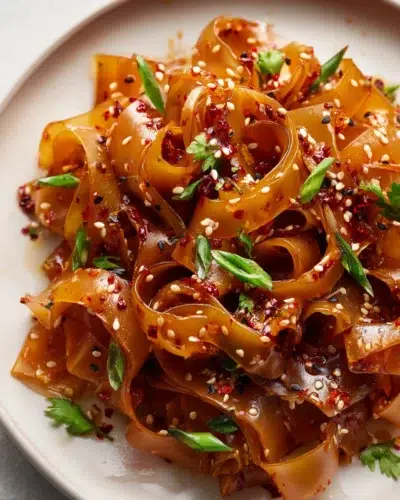
Gochujang Chili Oil Rice Paper Noodles
- Total Time: 20 minutes
- Yield: 4 servings 1x
- Diet: Vegetarian
Description
Make Gochujang Chili Oil Rice Paper Noodles with a quick spicy-sweet sauce, sesame crunch, and fresh herbs. It’s an easy rice noodle idea that’s perfect for busy nights.
Ingredients
2–3 tablespoons avocado oil
½ tablespoon red chili flakes
1 small clove garlic, minced
1 tablespoon green onions, chopped
1 tablespoon sesame seeds
1 teaspoon granulated sugar
1 tablespoon gochujang
2 tablespoons soy sauce
3 tablespoons warm water or chicken broth
Salt, to taste
8 sheets rice paper
Cilantro, chopped (for garnish)
Instructions
1. Set up your station. Grab a cutting board, a large bowl for tossing, tongs, and a shallow dish or pie plate for dipping rice paper. Have everything ready because once rice paper softens, it’s go-time.
2. Warm your water or broth. You want it warm, not boiling. This helps the sauce blend smoothly and keeps everything glossy.
3. In a small pan over medium-low heat, warm the avocado oil. Add chili flakes, garlic, green onions, and sesame seeds. Stir constantly for 30–60 seconds, just until fragrant and toasty.
4. Stir in the sugar. Let it dissolve into the warm oil mixture.
5. In a bowl, whisk together gochujang, soy sauce, and warm water or broth. Then whisk in your warm chili-sesame oil base until smooth and glossy.
6. Dip one rice paper sheet into room-temperature water for about 5–8 seconds, then lay it flat on a cutting board. Let it rest for 20–30 seconds to finish softening.
7. Use a sharp knife to cut the stacked rice paper into noodle-like strips. Repeat until you’ve used all 8 sheets.
8. Add the rice paper noodles to a large bowl. Pour in a little sauce first and toss gently with tongs to separate. Then add more sauce until everything is coated.
9. Taste and add salt if needed. Top with cilantro and extra sesame seeds if you like. If using toasted sesame oil, add 1–2 teaspoons at the end for a fragrant finish.
Notes
Serve immediately for best texture. These noodles are best fresh, but if storing, keep in an airtight container and eat within 24 hours. Reheat gently with a splash of warm water or broth.
- Prep Time: 10 minutes
- Cook Time: 10 minutes
- Category: Dinner
- Method: No Cook
- Cuisine: Asian
Nutrition
- Serving Size: 1 bowl
- Calories: 250
- Sugar: 3
- Sodium: 800
- Fat: 15
- Saturated Fat: 2
- Unsaturated Fat: 13
- Trans Fat: 0
- Carbohydrates: 25
- Fiber: 2
- Protein: 4
- Cholesterol: 0