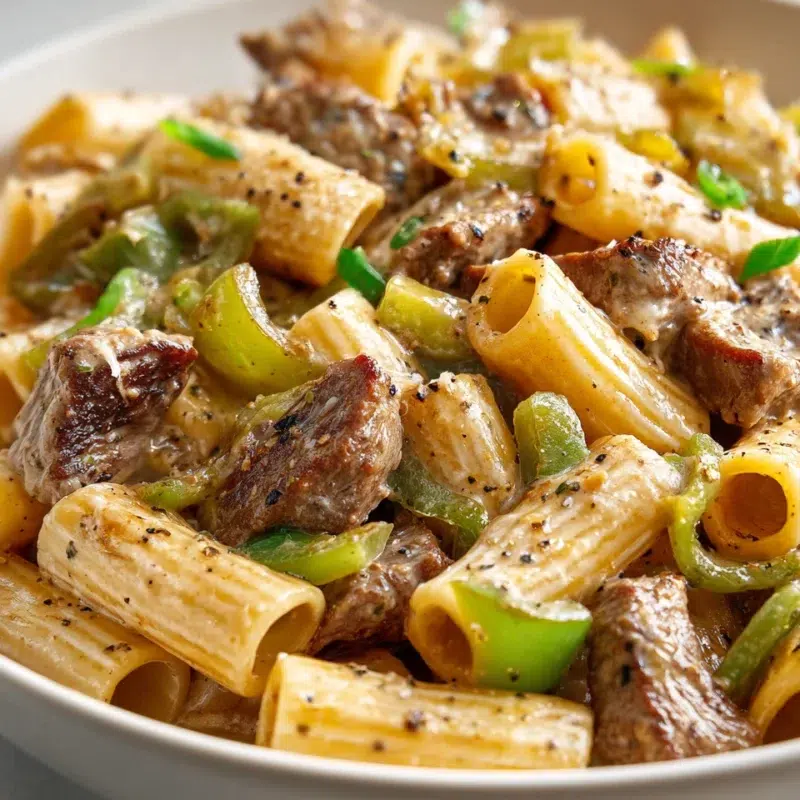
On the kind of weeknight where everyone is hungry at the exact same time (and somehow also asking for five different things), this Philly Cheesesteak Pasta saves me. It gives you all the steak-and-cheese comfort you want, but in a cozy bowl of pasta instead of a sandwich. The second the peppers and onions hit the skillet, my kitchen smells like something you’d order out, except it’s happening in sweatpants.
Why you’ll love it:
- Big “steak and cheese pasta” flavor, but totally weeknight-friendly
- That creamy cheesesteak pasta sauce clings to every bite
- Easy to customize for picky eaters and extra-hungry teens
Why This Pasta Tastes Like a Cheesesteak (Without the Fuss)
A good cheesesteak is all about a few simple things: savory beef, sweet peppers and onions, and melty cheese that pulls everything together. This Philly cheese pasta hits the same notes, just in a way that’s easier to cook and easier to serve when the table is chaotic.
I love how the onions and peppers get soft and a little sweet as they sauté. Then the sauce comes in and it’s like it hugs the pasta. Not fancy, not fussy, just comfort. If you need a cheesesteak pasta dinner idea that doesn’t require special rolls or perfect timing, this is it.
3 things that make it work:
- Beef first: You build flavor in the pan before anything creamy happens.
- Peppers and onions: They bring that classic cheesesteak sweetness and bite.
- Two-cheese sauce: Cream cheese for silkiness, provolone for that familiar melt.
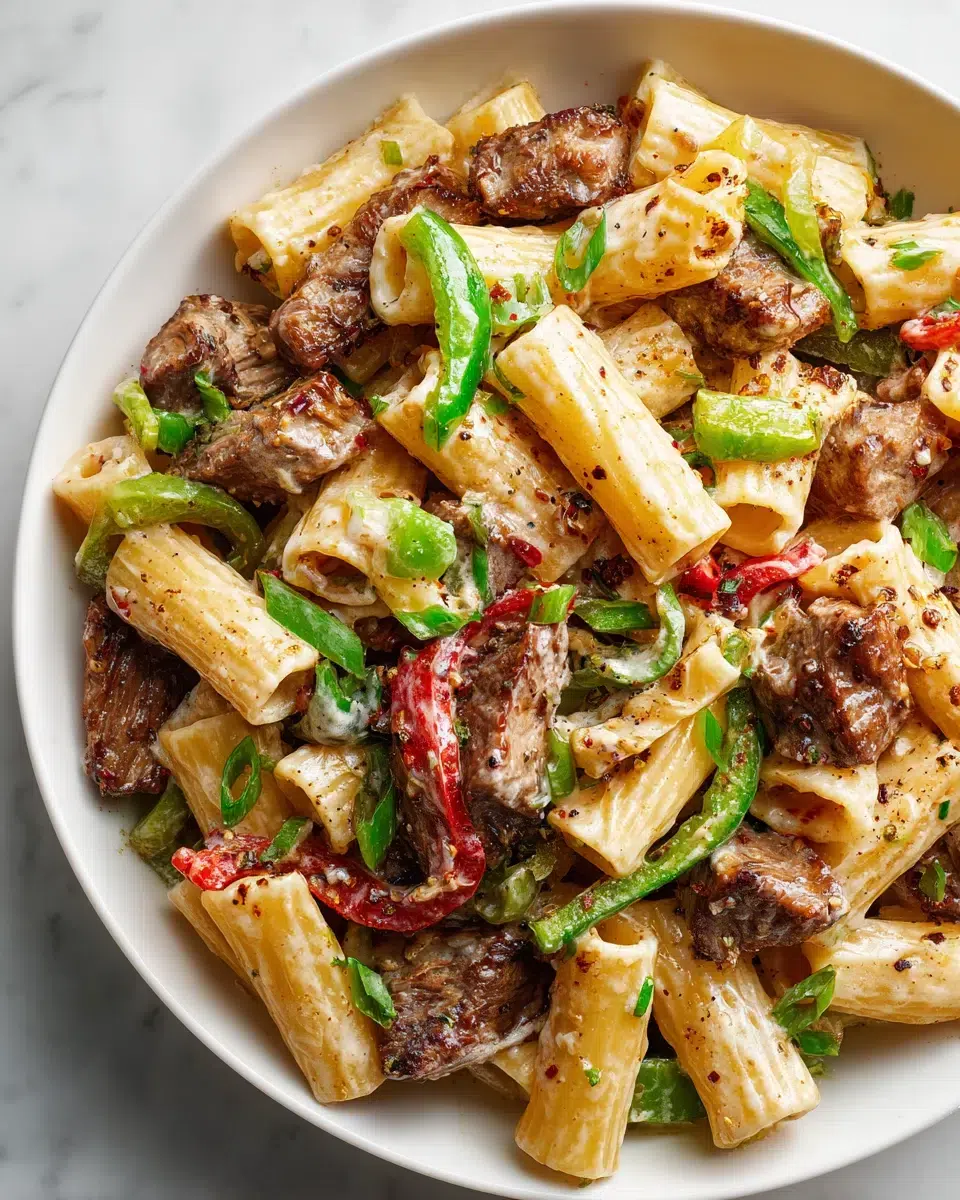
Ingredients You’ll Need
This is one of those steak pasta dinner recipes that looks like a lot on paper, but it’s really just a handful of everyday ingredients doing something magical together. I almost always have cream cheese in the fridge (thank you, kids and their bagel phases), and provolone is my go-to for that classic cheesy provolone pasta vibe.
Protein
- 1 lb ground beef or steak strips
- Salt, to taste
- Black pepper, to taste
Veg
- 1 green bell pepper, diced
- ½ medium onion, diced
- 2 cloves garlic, minced
Pasta
- 12 oz pasta (penne or rigatoni)
Sauce
- 1 tbsp olive oil
- 1 cup beef broth
- 8 oz cream cheese, softened
- 1 cup shredded provolone cheese
Optional variations
- 1 cup sliced mushrooms, sautéed with the peppers and onions
- ½ tsp crushed red pepper flakes for heat
- 1 extra bell pepper (any color), thinly sliced for more veggie bite
- ½–1 cup extra provolone for an ultra-cheesy finish
Best Beef Options (Ground Beef vs Steak Strips)
Both work beautifully in these Philly cheesesteak pasta recipes, so it really comes down to what you’ve got, what your budget is, and what kind of texture you’re craving.
- Ground beef: Fast, easy, and super kid-friendly. It crumbles into the sauce, so every forkful tastes like “steak and cheese” without anyone picking around pieces. This is what I reach for on the busiest nights.
- Steak strips: More classic “Philly steak pasta” bite. You get those tender beef pieces that feel a little special.
Eva tip (don’t overcook steak strips): Cook them quickly, then get them out of the hottest part of the pan. They’ll finish gently once everything’s tossed together, and you won’t end up with tough little chew-bites.
What Pasta Shape Works Best (Penne vs Rigatoni)
On pantry nights, I use what I have. I’ve made this with both, and nobody complained, which is basically a five-star review in my house.
- Best: Rigatoni, it traps sauce inside the tubes.
- Great: Penne, it cooks a bit faster and still holds the creamy sauce well.
- Avoid (if you can): Very thin noodles that can get lost in the sauce.
If you’re browsing Philly cheese pasta recipes and wondering what shape matters most, pick a sturdy tube and you’ll be happy.
How to Make Philly Cheesesteak Pasta (Step-by-Step)
This is the part where the kitchen starts sounding like dinner. You’ll hear that first sizzle when the beef hits the pan, then the softer hiss when the peppers and onions go in, and finally the quiet, creamy swirl when the sauce turns glossy. This is creamy cheesesteak pasta comfort, and it’s closer than you think.
Brown the beef. Heat a large skillet or deep pot over medium-high heat. Add the olive oil, then add ground beef (or steak strips). Season with salt and black pepper. Cook until browned.If using steak strips: Sear quickly just until browned, then transfer to a plate so you don’t overcook them.
Sauté the peppers and onions. In the same pan, add the diced bell pepper and onion. Cook 5–7 minutes, stirring often, until softened. Add the garlic and cook 30 seconds, just until fragrant.Don’t rush the sauté: This is where the “cheesesteak-style” flavor really builds.
Add broth and pasta. Pour in the beef broth. If you’re doing the one pot cheesesteak pasta method, add the pasta now and enough water to just cover the pasta (start with 2 to 2 1/2 cups). Bring to a gentle boil, then reduce to a steady simmer. Cook, stirring often, until pasta is tender and most of the liquid is absorbed (about 10–14 minutes, depending on shape).If you’re doing two-pot: Cook the pasta separately in salted water until just al dente, then drain (and save some pasta water).
Lower the heat, then add cream cheese. Reduce heat to low. Add softened cream cheese in chunks and stir until melted and smooth.
Lower heat before the cheese goes in: When the pan’s too hot, the sauce loses that silky hug-your-noodles texture. I wait until the bubbling calms down, then stir in the cheeses slowly.
Stir in provolone. Add shredded provolone a handful at a time, stirring until melted. Taste and adjust salt and pepper.
Add the beef back (if needed) and combine. If you used steak strips, add them back now. If you used ground beef and kept it in the pan, you’re already there. Stir everything together until warmed through and coated.
Rest 3–5 minutes before serving. Turn off the heat and let it sit.This is when the sauce settles and thickens naturally, like it’s taking a deep breath before you scoop.
Sauté Tips for Peppers and Onions (Soft vs Slightly Crisp)
This is where you get to choose your vibe. My kids are split, which feels very on-brand for our dinner table. One wants everything soft and cozy, the other wants that cheesesteak shop bite.
Slice peppers and onions for the bite you want: Diced melts into the sauce and feels extra cozy. Thin slices give you that peppery-sweet ribbon in every forkful.
Eva’s Skillet Rule: Don’t crowd the pan. If your veggies look wet and steamy instead of sizzling, turn the heat up a touch and stir less often. You want sautéed, not boiled.
These little details are what make cheese steak pasta recipes taste like you really meant to do it, even if you’re cooking between homework questions.
Creamy “Steak and Cheese” Sauce Breakdown
This sauce is what turns it from regular pasta into steak and cheese pasta. It’s creamy, velvety, and just thick enough to coat a spoon. The secret is gentle heat and the right order.
Key move: Lower the heat before adding any cheese. High heat can make dairy separate, and nobody wants a grainy sauce after all that effort.
What to look for:
- Glossy: The sauce looks shiny, not dull.
- Smooth: No little cream cheese lumps left behind.
- Clingy: It coats the pasta and doesn’t slide right off.
That’s when your cheesy provolone pasta moment happens, the kind where you stir and the whole pot looks like dinner is about to disappear.
One-Pot vs Two-Pot Directions (Choose Your Adventure)
I love options because life changes by the hour. Some nights I want fewer dishes. Other nights I want perfect pasta texture because someone is being “very opinionated” about noodles.
- One-Pot: Cook beef and veggies, add broth and pasta, simmer until tender, then lower heat and stir in cheeses. This is the true one pot cheesesteak pasta approach, and it’s my weeknight default.
- Two-Pot: Cook beef and veggies in the skillet. Boil pasta separately, drain (save pasta water), then combine everything and stir in cheeses over low heat. This gives you maximum control and makes it easier to prevent overcooked pasta.
How to Keep It Creamy (Thickening + No-Dry-Out Fixes)
Here’s the honest truth about creamy pasta: it looks perfect, then you set the table, answer a question, refill someone’s water, and suddenly it’s thicker than you planned. That’s normal. I do a quick “leftover test” after it sits 5 minutes. It should still look glossy and spoonable, not clumpy and tight.
And yes, I hear this question all the time, “How do I thicken the sauce for Philly Cheesesteak Pasta?” You can thicken it, loosen it, and rescue it if it looks a little off. You’ve got options.
- If it’s too thick: Stir in a splash of warm beef broth or reserved pasta water until it turns glossy again.
- If it’s too thin: Simmer 2–3 minutes, stirring, then add a small handful of provolone and melt it in.
- If it looks broken or grainy: Turn the heat down, add 1–2 tablespoons warm broth, and stir gently until it smooths out.
Reserve a splash of pasta water (even for two-pot): That starchy water is my little weeknight secret for getting the sauce glossy again, especially if the kids get distracted and dinner sits five minutes.
Easy Add-Ins and Variations
This is one of my favorite “clean-out-the-fridge” dinners because it can handle a little improvising. One night I tossed in mushrooms I needed to use, and Noah called it “restaurant pasta,” which is basically his highest compliment.
If you want a cheesesteak pasta dinner idea that you can tweak without breaking the recipe, try one of these:
- Sliced mushrooms: Adds savory depth, sauté with peppers and onions.
- Crushed red pepper flakes: Adds heat, especially good if you like a little kick.
- Extra bell pepper: Adds more veggie bite and color.
- Extra provolone: Adds an ultra-cheesy finish, especially if you want that stretchy pull.
Make-Ahead, Meal Prep, and Storage
Eva’s Note here, this pasta is a lifesaver for lunches. I’ll pack a portion before dinner hits the table because if I wait until after, it mysteriously “disappears.”
For meal prep, it helps to know that the sauce thickens as it chills. That’s not a failure, that’s just dairy doing dairy things. These Philly cheesesteak pasta recipes are still great the next day, you just need a tiny splash of liquid when reheating.
- Fridge: Store in an airtight container for up to 3–4 days.
- Freezer: Freeze in portions for up to 2 months (texture is best when reheated gently).
- Reheating overview: Warm low and slow, add a splash of broth or water, and stir until creamy.
If you love make-ahead comfort food, you might also like my cheesy beef noodle casserole, it has that same cozy, family-style energy.
What to Serve with Philly Cheesesteak Pasta
Because this is a rich, creamy steak pasta dinner, I like to put something crisp and fresh next to it. It makes the whole plate feel balanced, like you did more work than you actually did.
- Simple green salad: Something crunchy with a tangy dressing.
- Roasted broccoli or green beans: Easy sheet pan side while the pasta cooks.
- Garlic bread: For the people who believe carbs should come with carbs.
If you want another cozy pasta-night option for a different day, my easy baked ziti is always a crowd-pleaser.
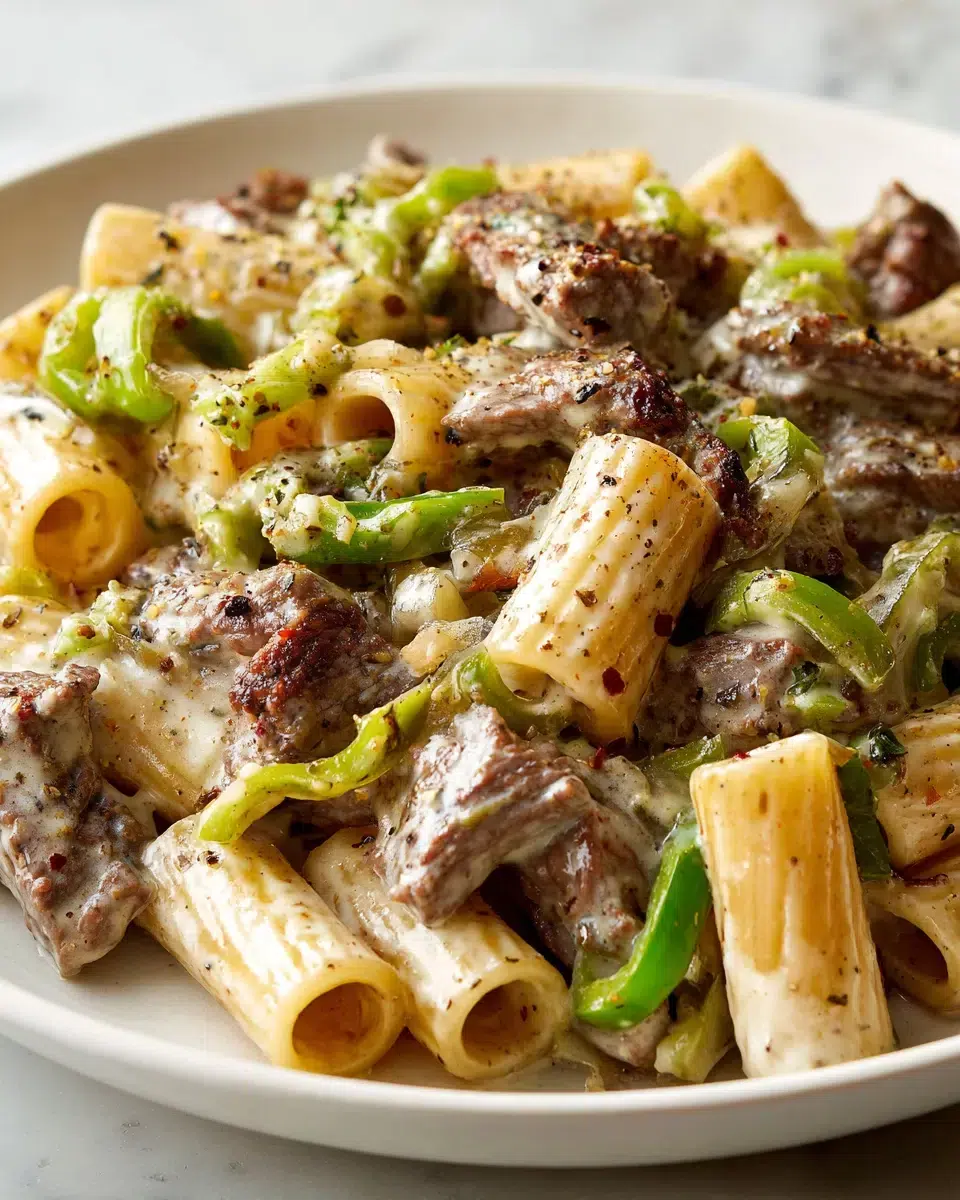
Frequently Asked Questions about Philly Cheesesteak Pasta
Q: How do you make Philly Cheesesteak Pasta creamy without drying out?
✅ Answer: Keep the heat low when adding the cheeses, and don’t over-reduce the liquid before the pasta goes in. If it thickens too much as it sits, loosen it with a small splash of warm broth (or reserved pasta water) and stir until glossy.
💡 Personal Detail: I watch for that shiny, spoon-coating look right before serving, that’s when I know it’s going to feel creamy on every bite.
Q: Can I use steak strips instead of ground beef in Philly Cheesesteak Pasta?
✅ Answer: Yes, cook steak strips quickly over medium-high heat just until browned, then proceed with the vegetables and sauce. Add the steak back at the end so it stays tender while everything warms through.
💡 Personal Detail: That first bite with tender beef plus sweet pepper in the same forkful is the whole reason I make this.
Q: What pasta shape works best for Philly Cheesesteak Pasta (penne vs rigatoni)?
✅ Answer: Rigatoni holds up well and traps sauce inside the tubes, making it extra satisfying. Penne is a great everyday choice and cooks a bit faster. Choose a sturdy, tube-shaped pasta so the creamy sauce clings and doesn’t slide off.
💡 Personal Detail: My family calls rigatoni the extra cheesy scoop shape because it grabs sauce inside and out.
Q: Can I make Philly Cheesesteak Pasta in a slow cooker, and how long should it cook?
✅ Answer: You can cook the beef, peppers, onions, and broth mixture on LOW for about 4–5 hours or HIGH for about 2–3 hours, then stir in cooked pasta and the cheeses near the end until melted and smooth. This keeps the pasta from turning too soft and helps the sauce stay creamy.
💡 Personal Detail: Walking back into the kitchen when it smells like peppers and onions have been simmering all afternoon feels like future-me did something really kind.
If you’re curious about a slow cooker version, you might like my crock pot cheesesteak tortellini too.
Q: How do I thicken the sauce for Philly Cheesesteak Pasta?
✅ Answer: Simmer for a few minutes to reduce slightly, then stir in more shredded provolone a handful at a time until the sauce coats the pasta. If you cooked the pasta separately, adding a splash of starchy pasta water can help the sauce cling and feel thicker without getting heavy.
💡 Personal Detail: I love the moment the sauce starts grabbing onto the noodles and you can tell it’s going to be a good bowl.
Q: Can I substitute provolone with another cheese?
✅ Answer: Yes, choose a good melting cheese that stays smooth, like mozzarella for mild stretch or white cheddar for a sharper bite. For best texture, shred it yourself if possible so it melts evenly.
💡 Personal Detail: I’ve let the kids pick the cheese for their version, and it’s honestly a fun way to get everyone excited about dinner.
Q: How long does Philly Cheesesteak Pasta last in the fridge?
✅ Answer: Store it in an airtight container in the fridge for up to 3–4 days. The sauce will thicken as it chills, so plan on adding a small splash of warm broth or water when reheating and stirring until it turns creamy again.
💡 Personal Detail: I reheat it until the steam just stops raging, then I stir and watch the sauce go glossy again.
Eva’s Note (A Cozy Final Thought)
Eva’s Note: This is the kind of dinner that makes everyone wander back into the kitchen for just one more scoop. If you try it, tell me what pasta shape you used and whether you went ground beef or steak strips. I love hearing how your kitchen makes it your own, and I hope this Philly Cheesesteak Pasta becomes one of those “keep it in the rotation” recipes for you.
Thank you for cooking with me today, it means more than you know.
Come hang out with me over on Pinterest for more cozy, family-friendly dinners.
Print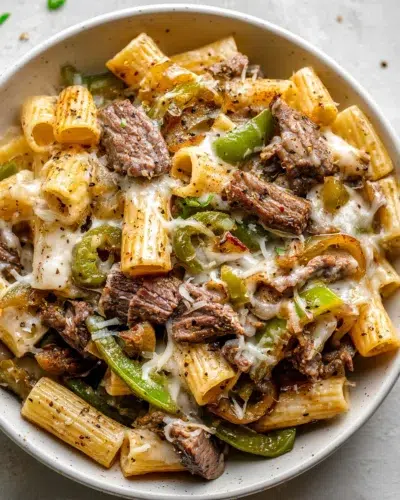
Philly Cheesesteak Pasta (Creamy Cheesy Dinner)
- Total Time: 30 minutes
- Yield: 4 servings 1x
Description
Make Philly Cheesesteak Pasta with tender beef, peppers, onions, and a creamy provolone-cream cheese sauce. An easy, cheesy weeknight dinner.
Ingredients
1 lb ground beef or steak strips
Salt, to taste
Black pepper, to taste
1 green bell pepper, diced
½ medium onion, diced
2 cloves garlic, minced
12 oz pasta (penne or rigatoni)
1 tbsp olive oil
1 cup beef broth
8 oz cream cheese, softened
1 cup shredded provolone cheese
Instructions
1. Brown the beef. Heat a large skillet or deep pot over medium-high heat. Add the olive oil, then add ground beef (or steak strips). Season with salt and black pepper. Cook until browned. If using steak strips: Sear quickly just until browned, then transfer to a plate so you don’t overcook them.
2. Sauté the peppers and onions. In the same pan, add the diced bell pepper and onion. Cook 5–7 minutes, stirring often, until softened. Add the garlic and cook 30 seconds, just until fragrant.
3. Add broth and pasta. Pour in the beef broth. If you’re doing the one pot cheesesteak pasta method, add the pasta now and enough water to just cover the pasta (start with 2 to 2 1/2 cups). Bring to a gentle boil, then reduce to a steady simmer. Cook, stirring often, until pasta is tender and most of the liquid is absorbed (about 10–14 minutes, depending on shape). If you’re doing two-pot: Cook the pasta separately in salted water until just al dente, then drain (and save some pasta water).
4. Lower the heat, then add cream cheese. Reduce heat to low. Add softened cream cheese in chunks and stir until melted and smooth.
5. Stir in provolone. Add shredded provolone a handful at a time, stirring until melted. Taste and adjust salt and pepper.
6. Add the beef back (if needed) and combine. If you used steak strips, add them back now. If you used ground beef and kept it in the pan, you’re already there. Stir everything together until warmed through and coated.
7. Rest 3–5 minutes before serving. Turn off the heat and let it sit. This is when the sauce settles and thickens naturally, like it’s taking a deep breath before you scoop.
Notes
Reserve a splash of pasta water (even for two-pot): That starchy water is my little weeknight secret for getting the sauce glossy again, especially if the kids get distracted and dinner sits five minutes.
Fridge: Store in an airtight container for up to 3–4 days.
Freezer: Freeze in portions for up to 2 months (texture is best when reheated gently).
Reheating overview: Warm low and slow, add a splash of broth or water, and stir until creamy.
- Prep Time: 10 minutes
- Cook Time: 20 minutes
- Category: Dinner
- Method: Skillet
- Cuisine: American
Nutrition
- Serving Size: 1 bowl
- Calories: 650
- Sugar: 5
- Sodium: 800
- Fat: 40
- Saturated Fat: 20
- Unsaturated Fat: 15
- Trans Fat: 0
- Carbohydrates: 45
- Fiber: 3
- Protein: 30
- Cholesterol: 100